Another example is investing in larger venture funds. The larger venture funds can have a clear target in mind for the kind of companies they want to invest in, like an EV (electric vehicle) company. So, rather than invest in a single startup, they are investing in multiple companies.
What is the venture capital investment strategy?
A VC investment by its nature is risky and takes place before a company goes public or, in early-stage companies, even before a company has an established track record. The possibility of large losses—even the entire investment—is factored into the VC's business model. In fact, VCs anticipate that they'll lose money on most investments. The odds of hitting a "home run," earning over 10x the venture capital investment, is small and can take years to realize. The calculation is that a few successful companies can pay dividends that far offset the losses.
Despite the long odds, venture capital is a major economic engine that:
- Generates job growth
- Spurs innovation
- Creates new business models that change the world
The funding VCs provide gives nascent businesses—and industries—the chance to flourish. They help to bring ideas to life and fill the void that capital markets and traditional bank debt leave due to the high risk associated with limited operating history, lack of collateral and unproven business models. VC funds play a particularly important role when a company begins to commercialize its innovation.
What is a venture capital investment fund?
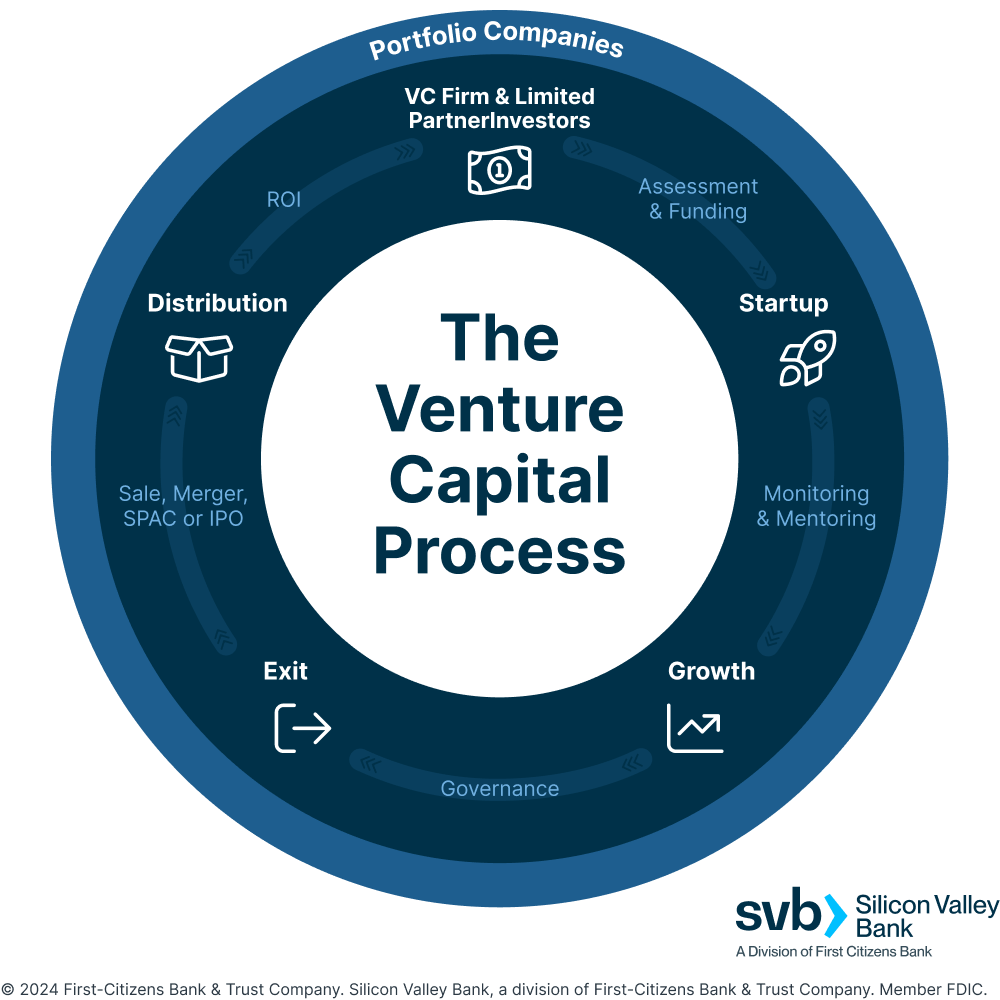
A venture capital investment fund is a pooled investment vehicle that primarily invests in startups and small- to medium-sized enterprises with high growth potential. These funds are managed by VC firms, which raise capital from LPs, such as pension funds, endowments and high-net-worth individuals. The goal is to generate significant returns for investors by identifying and nurturing companies that will scale rapidly and eventually provide a profitable exit through an acquisition or an IPO.
Despite US VC investment falling below previous peaks, there is still more capital flowing to US startups this year than in 26 of the previous 30 years. This reflects a vibrant landscape for VC fundraising and investment, driven by a recalibration and recovery in the innovation economy. Non-traditional investors continue to expand their participation in the VC arena, including:
- Private equity
- Corporate venture
- Hedge funds
- Sovereign funds
The latest State of the Market report tells the story of this ongoing trend, highlighting the resilience of the venture capital market despite fluctuations in investment levels.
Why venture funding?
Tapping venture capital is a logical choice. There are many sources and, as noted above, non-traditional investors are joining an already large mix of traditional VC firms. Many funds target a specific industry or sector, geography or stage of company development. Many connections are made through startup networking groups, accelerators and mentoring programs. Among the first items is to create a pitch deck and target firms that appear to be good fit for your company and business model.
If an investor is impressed by your pitch deck and business plan, they will do their due diligence to verify your point of view. This will include a full analysis of your business model, products or services, financial position and performance—now and in earlier ventures.
Suppose the decision is made to go forward. In this case, the venture investor will present a term sheet that will include:
- The venture capital investment amount they are proposing to make
- The equity stake in the company that they expect in return
- Other conditions of the deal
There may be conditions you need to meet before they release their funds, including additional fundraising on your part. You should expect that VC money can be structured to come in multiple rounds over several years.
Most terms are negotiable; however, you should prioritize those that are the most important to you and your partners, particularly other financial partners. Be specific and realistic when you're negotiating, or you run the risk of coming across as inexperienced or overly confident. Either way, this can lead to getting off on the wrong foot with your new VC partner.




 Article