Finally, if you have friends and family who can add value besides money, consider it a huge asset and don't be afraid to lean on it. Greenough realized this firsthand when his business was on the verge of going bust and being able to tap his father's experience proved to be a lifeline. He reached out to him, and over a dinner, made three points. "I need your experience," he recalls. "I need to give you an investor update. And I need you to be my dad."
Knowing Greenough had built something of value, his father pushed him to get a $50,000 bridge investment. That proved to be enough to keep the company afloat until he was able to sell it to Capital One.
All his investors ultimately ended up with a modest gain, which given the company's brush with failure, was pretty good. "We were about to go to zero," he says. "So yes, they were happy with the outcome." There's a lesson there, too. Your investors don't want any surprises. Be transparent with your friends and family and keep them in the loop about your ups and downs. It should help smooth things over especially if you hit a rough patch or worse.
FAQs
Frequently asked questions about friends and family funding
What is a friends and family round?
A friends and family round is often the first round of funding for many startups, where founders raise capital from their personal network. This typically involves smaller investments compared to later funding rounds and can be crucial for validating your business idea, developing a minimum viable product (MVP) and gaining traction before seeking professional investors.
How much equity should I give away in a friends and family round?
While there's no one-size-fits-all answer, equity given away in a friends and family round typically ranges from 5% to 20%. Consider factors like the amount of money being raised, the stage of your startup and the level of involvement of your investors. It's crucial to consult with a legal professional to structure the deal appropriately and avoid future complications.
How much equity should I give away in a seed round?
The equity given away in a seed round is usually higher than in a friends and family round, often between 10% and 20%. This will depend on the valuation of your company, the amount of funding raised, and investor expectations. Remember, it's important not to give away too much equity because you'll need to leverage equity for future fundraising efforts and future hires.
What are the risks of taking investments from friends and family?
The main risks include potential strain on personal relationships if the business fails, lack of business expertise from investors and possible complications in future funding rounds. According to the US Bureau of Labor Statistics, approximately 20% of new businesses fail within their first year, and about half don't survive beyond five years. It's crucial to be transparent about these risks with potential investors.
How should I pitch my startup to friends and family?
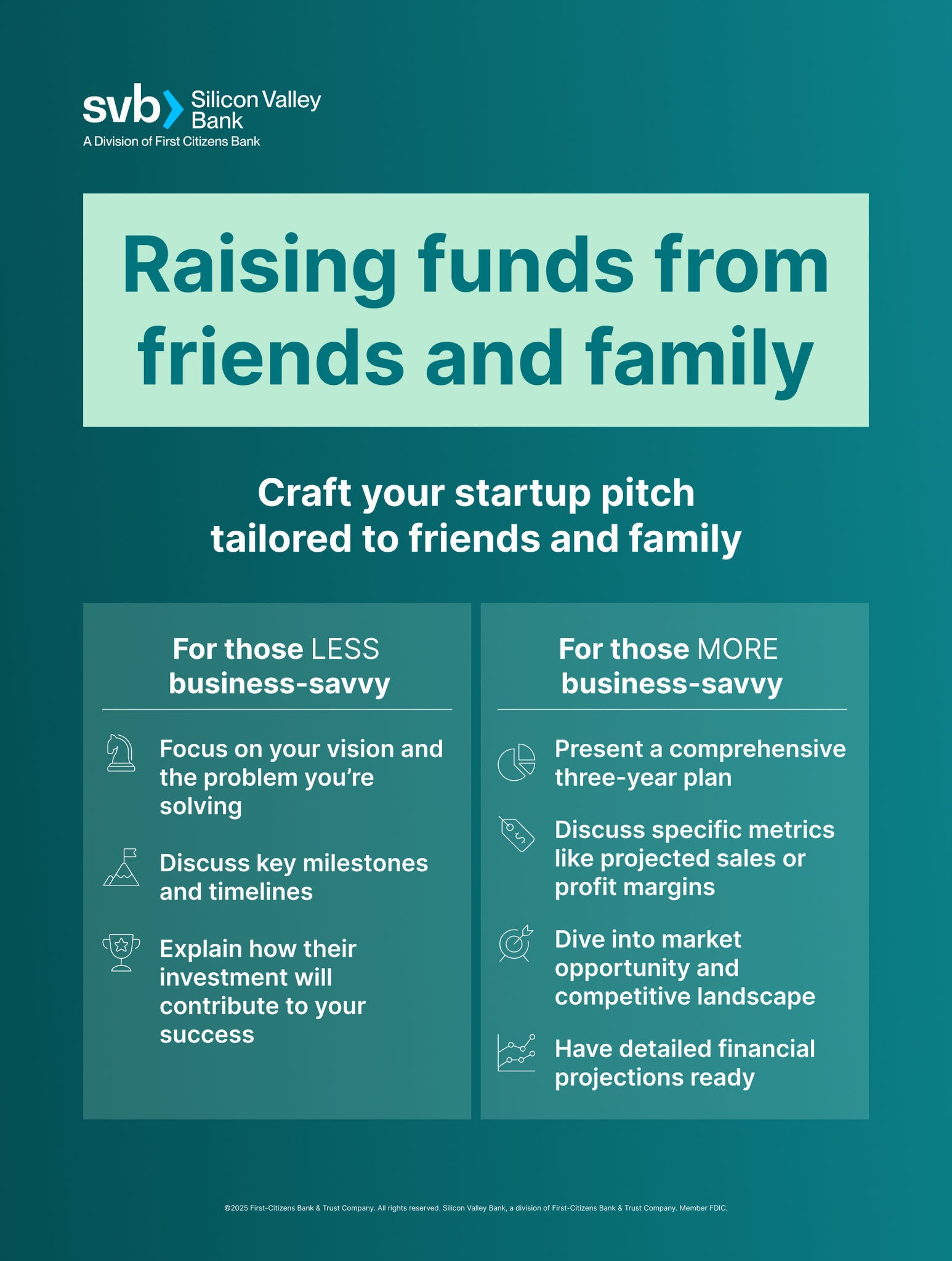
Tailor your pitch based on your audience's business acumen. For those less familiar with startups, focus on your vision, key milestones and how their investment will contribute to success. For more business-savvy individuals, present a comprehensive plan with specific metrics and financial projections. Regardless of the audience, always be transparent about risks and avoid overpromising.
How can I protect against dilution when raising funds?
Strategies for founders include raising capital efficiently, exploring alternative funding sources, negotiating pro-rata rights, implementing vesting schedules and setting aside an option pool before fundraising. For investors, consider anti-dilution provisions, participating preferred stock and negotiating information rights. Both parties should understand the long-term implications of these strategies.
How should I communicate with friends and family investors?
Establish a clear communication plan with regular updates, perhaps monthly or quarterly. Use a standardized format for updates and clearly define the level of involvement investors can expect. This approach helps manage expectations and maintains positive relationships. Consider implementing a basic governance structure, such as regular board meetings or an advisory board, to set professional expectations.
When should I transition from friends and family funding to professional investors?
As your business gains traction, it's important to transition to professional investors rather than continually relying on friends and family. Professional investors bring disciplined assessment and can help prepare your startup for future growth. Be ready for increased due diligence and more formal reporting requirements when making this transition. Networking with angel investors is a natural next fundraising step to raising a friends and family round.




 Article