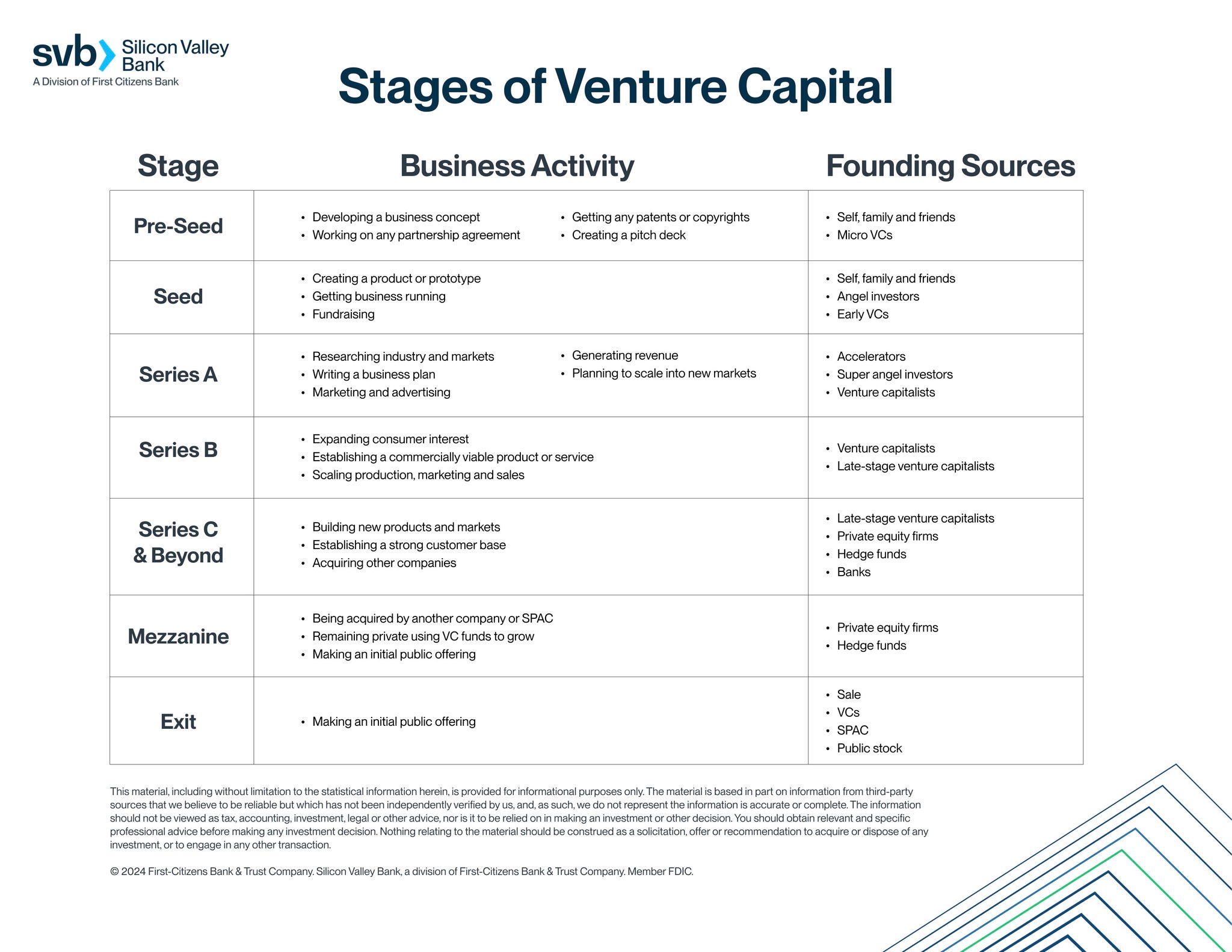
The most common investors at this stage are:
- Late-stage venture capitalists
- Private equity firms
- Hedge funds
- Banks
- Corporate VC funds
- Family offices
Frequent Series C investors include:
Mezzanine stage
The final stage of VC marks your transition to a liquidity event, either an exit via going public or M&A. You've reached maturity and now need financing to support major events.
Entering the mezzanine stage—it's often also called the bridge stage or pre-public stage—means you are a full-fledged, viable business. Many of the investors who have helped you reach this level of success will now likely choose to sell their shares and earn a significant return on their investment.
With the original investors leaving, that opens the door for late-stage investors to come in, hoping to gain from an IPO or sale.
Exit stage (IPO)
An IPO, or initial public offering, is the natural progression of funding beyond VCs. It's the process of taking your private company public by offering corporate shares on the open market. This can be a very effective way for a growing startup with proven potential or a long-established company to generate funds and reward earlier investors, including the founder and team.
To go public, you need to:
- Form an external public offering team of underwriters, lawyers, certified public accountants and SEC experts
- Compile all your financial performance information and project future operations
- Have your financial statements audited by a third party who'll also generate an opinion about the value of your public offering
- File your prospectus with the SEC and determine a specific date for going public
Some of the benefits of going public include:
- An effective way to raise significant capital
- Secondary offerings that will enable you to generate additional funds, typically used to pay off original investors and early leadership team
- Public stock that can be more attractive as a part of executive compensation and as an employee benefit
- Easier mergers because you can use public shares to acquire another company
Conclusion
All that said, you don't have to go public. For example, one option is with a special purpose acquisition company (SPAC). SPACs are an option to raise capital faster and with fewer hurdles than a conventional IPO. You can remain private and continue to accept VC money to scale. SPACs may also offer you more price certainty and provide a clearer idea of who investors will be. This can help you weigh the value of short-term investors looking for a quick return —through a conventional IPO—compared to investors with a longer-term goal of helping you grow over time.
A successful startup requires much more than just a great idea. It needs a regular stream of funding provided by investors who believe in your company. Venture capital is an indispensable part of the fundraising ecosystem. Remember that VCs are looking for promising entrepreneurs to help them launch their businesses. VCs will typically invest again and again at every startup stage.



 Article