The scaling process can be unpredictable—it's important to remain agile and willing to pivot quickly from obstacles and take advantage of opportunities. As a founder, you'll also focus on the big picture. Smaller tasks will need to be reassigned so you can focus on leading the company through the growth phase.
You're in this stage if you have:
- A working product
- Proven product ROI
- Evidence that sales cycles are fast, and sales are efficient
- Secured Series A funding
You can graduate to the next stage when you've:
- Achieved significant growth
- Hired a more complete team, including sales
- Attracted incremental rounds of Series A funding
- Shifted corporate attitude from operating a risky startup to building a company with sustainable growth
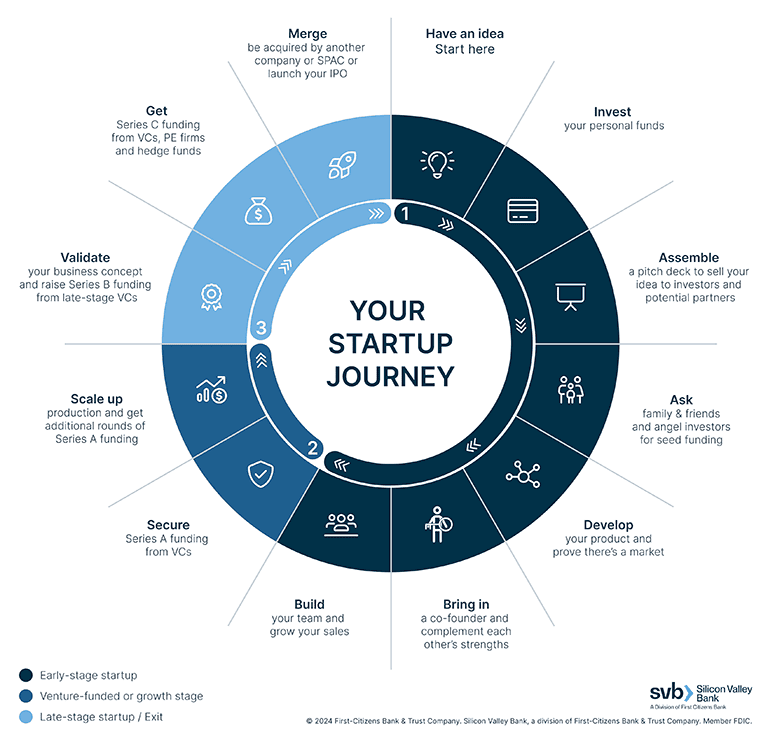
A late-stage startup typically has dependable financing sources and is executing on the business plan. When pitching investors for Series A funding, it's all about potential. Now it's all about performance. Investors are typically traditional venture capitalists, private equity firms, growth firms, corporate venture capitalists and family offices.
If your initial venture-funded stage has been successful and you have secured Series A funding, your company has demonstrated your ability to grow. In the context of an enterprise, this usually means that you have all the basic sales, deployment and support teams in place.
At this point in the startup life cycle, perhaps you've hired a CEO who is better equipped to manage the day-to-day operations. Fractional hiring is another consideration and an option to hire experienced professionals on an as needed basis. Other staff are also in place, and your business has now firmly established its presence within the industry.
Although your company is up and running, it needs more fuel to exist. Your primary focus will need to be on fundraising and hiring talent.
As a founder, you're facing other decisions, too. Do you push for further expansion? For example, consider expanding your product mix or entering new geographies as you capitalize on your stability. If you decide to expand further, you will need to ask yourself how the business can sustain more growth through acquisition or additional fundraising. Do you go public to raise the necessary funds? Are there other opportunities? And are you financially stable enough to survive the risk of an expansion that doesn't go as planned?




 Article