


What is equity in a startup?
Startup equity is the ownership share of a company, expressed as a percentage of total shares outstanding. On day one, founders own 100 percent of the company. As the business grows, equity is exchanged for capital or granted to employees, resulting in shared ownership across founders, investors and team members.
How does startup equity work in practice?
When two or more founders launch a company, they choose how to split that initial 100 percent: 50/50, 60/40, 40/40/20 or another founder equity split tied to each person's role and contribution. The split should reflect long-term value creation, not convenience.
Equity share in your startup will depend on how many founders you have and their contribution to the success of your company. However, to build your business, you will likely need to exchange equity for fundraising and to lure new talent.
How much equity should a founder get in a startup? Early-stage founders typically give up 15 to 25 percent per funding round to match the risk investors take in backing an unproven business. The specific amount can vary greatly depending on the startup's needs and the level of investment required. But as you grow and demonstrate greater success, your startup equity increases in value and investors are typically willing to pay more—or inversely accept less equity in exchange for their funding.
When venture capitalists (VCs) invest capital in exchange for equity in your company, you are forming a long-term business relationship. If your company turns a profit, investors make returns proportionate to the percentage of equity they have in your startup. On the other hand, if your startup fails, the investors lose their money. However, VCs are willing to take this risk because owning a percentage of a successful startup can be very profitable—and keeps the ecosystem moving when they use the proceeds to make investments in the next generation of startups.
What is the difference between stock, shares and equity in a startup?
Stocks and equity are often used interchangeably to describe ownership interest in a company. However, stock is a general term for the ownership certificates of any company, while equity refers to the value of the shares issued by a company. Shares, on the other hand, are how your company's stock is divided.
In a startup context, founders and employees typically hold common stock, while investors hold preferred stock, which carries additional rights such as liquidation preferences and anti-dilution protections.
How do you calculate equity in a startup?
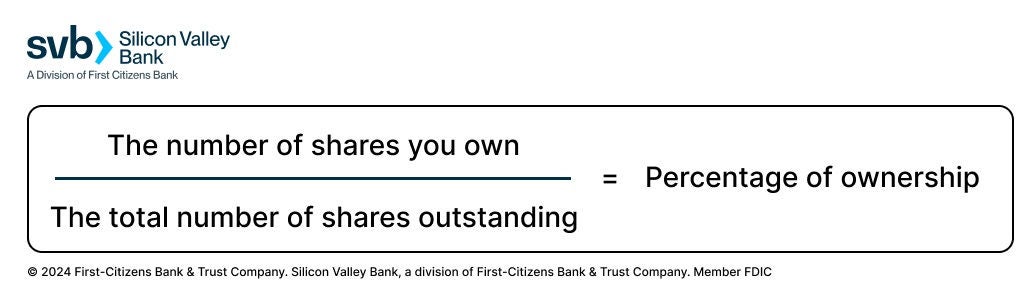
To calculate equity in a startup, your percentage of ownership is equal to the number of shares you own divided by the total number of shares available. This calculation helps founders and investors understand their stake in the company and the value of their investment as the company grows.

 Article