


The rate environment shaped by Warsh's inflation-first framework has direct implications for credit markets, including the private credit market, which we examine in this month's Credit vista: Private credit under the microscope.
Economic vista: The Fed passes the baton
Jon Schwartz, Senior Portfolio Manager
Kevin Warsh's first FOMC meeting in June 2026 signaled a clear break from the previous policy regime—not through a rate change, but through a fundamental shift in how the Fed communicates, operates and defines its institutional priorities.D In our view, this marked a distinct inflection point— not so much in near-term policy, but rather in the broader focus, communication strategy and institutional direction of the Fed under new leadership.
Simplicity, discipline and a focus on inflation
From the outset, it appeared that Chairman Warsh was setting a new tone emphasizing a more disciplined and direct policy approach. The accompanying FOMC statement was notably simplified, adopting a "just the facts" tone that stripped away interpretive language and reduced reliance on implicit signaling. This shift appears intentional and reflects Warsh's preference for clarity and precision over the more layered communication style of previous leadership. Less nuance equals less confusion in the eyes of the new regime.
The Committee's decision to hold rates was unanimous, further reinforcing a sense of alignment early in Warsh's tenure. Importantly, the messaging around inflation was both firm and unambiguous. Warsh underscored the Fed's commitment to its 2% inflation target, framing inflation control not as a passive outcome, but as an active policy objective. His statement that "inflation is a choice—we are going to get there," communicated a high degree of conviction and a willingness to maintain policy restrictiveness as needed. Of course, the Fed's dual mandate remains unchanged, but it seems to be emphasizing price stability over full employment.
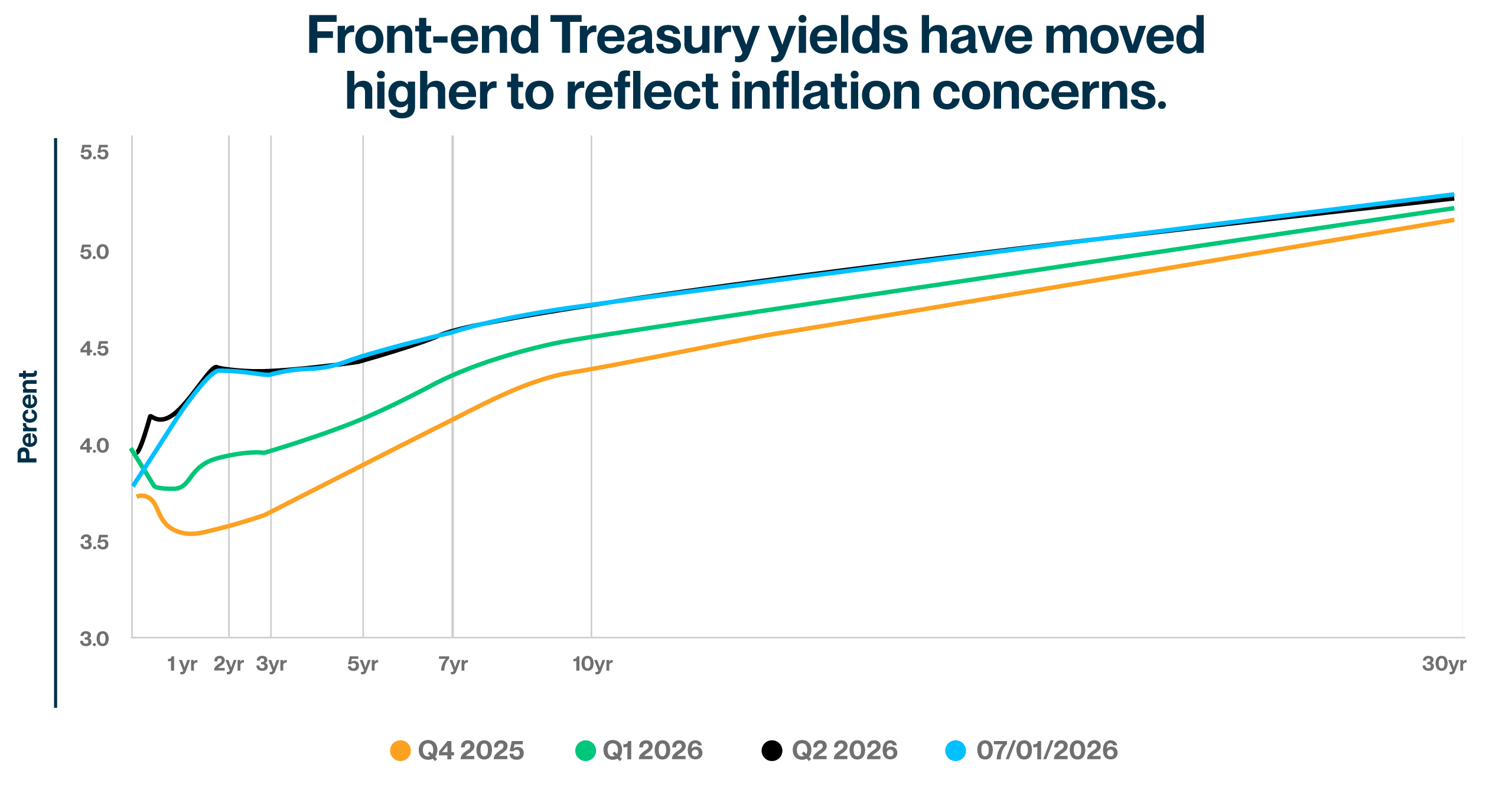
Despite the new communication style, the Fed's most recent assessment of the economy showed that it remains broadly stable. Labor markets continue to hold up well, in its view, with continued job creation and a largely unchanged unemployment rate. This provides the Fed with the flexibility to maintain a more restrictive policy without immediate concern about labor market deterioration. At the same time, Warsh made clear that persistently elevated prices remain a central challenge, perhaps even more so after the energy price increase earlier this year. The framing of inflation as a burden on households reinforces the prioritization of price stability within the dual mandate. In practice, this suggests that Warsh is willing to tolerate continued tight policy conditions until there is clear and sustained progress toward the inflation target. In the reality of the bond market, this likely indicates slightly higher yields for longer.
The end of Fed forward guidance
One of the most important changes being introduced in the new Warsh era is the move away from traditional forward guidance. The Committee explicitly acknowledged that forward guidance has been stepped back, marking a significant departure from the communication tools that defined the post‑Global Financial Crisis (GFC) and post‑pandemic policy environment. Under Warsh, policy signaling appears to be shifting toward a more discretionary, data-driven framework, where future decisions will be less recommitted and more contingent on evolving conditions. This will reduce the predictability of the policy path but increase flexibility, which is consistent with Warsh's long-standing views on the limits of rigid policies. While the Summary of Economic Projections (SEP) remains in place, Warsh implied that its role, along with broader communication tools such as press conferences, may be revisited as part of a broader review. Markets and Fed watchers need to be ready for this evolving communication style.
Five task forces: A "first principles" rebuild of the Fed
Perhaps the most consequential takeaway from the June 2026 meeting was Warsh's introduction of five internal task forces, which collectively signal a comprehensive reexamination of the Fed's operating framework. This initiative reflects Warsh's emphasis on returning to "first principles," as he calls them, and modernizing the institution for today's oft changing and dynamic economic landscape.
The five areas under review are:
- Communications: Change is already in the air, and Warsh wants to assess and improve how the Fed communicates policy, including the future role of forward guidance.
- Balance sheet policy: The Fed wants to evaluate some of its tools beyond simply setting the policy rate, and it's reviewing the benefits and long-term structure of the ample reserves regime.
- Data and measurement: Along with more straightforward communication, the Fed wants to consider incorporating new data sources and improving methodological approaches to setting policy.
- Productivity and labor: Among other areas of emphasis, the Fed will be analyzing the economic impact of technological change, including how AI might reshape productivity and labor markets.
- Inflation framework: With its stated primary focus, the Fed is reassessing inflation dynamics and policy tools from foundational principles.
Each task force will be led by subject matter experts and produce recommendations aimed at ensuring the Fed remains "fit for purpose" in a rapidly evolving economic environment. Warsh stressed that these groups would start from first principles rather than incremental adjustments. This simply underscores the scale of the potential reset for the central bank. Taken together, these changes point to a broader institutional shift under Warsh. The Fed is not simply adjusting policy within an existing framework—it is actively reconsidering the entire framework itself. This aligns with Warsh's long-standing emphasis on transparency, accountability and the need for central banks to adapt to structural economic changes rather than rely on legacy models. The planned review of the Fed's communication tools, including the SEP and press conference structure, is expected to be complete by year end, and it clearly indicates the priorities and potential scope of this reset. Markets are effectively being presented with a "new chapter" for the central bank, with less focus on predefined policy paths and greater reliance on real-time data and assessment.
Implications for markets
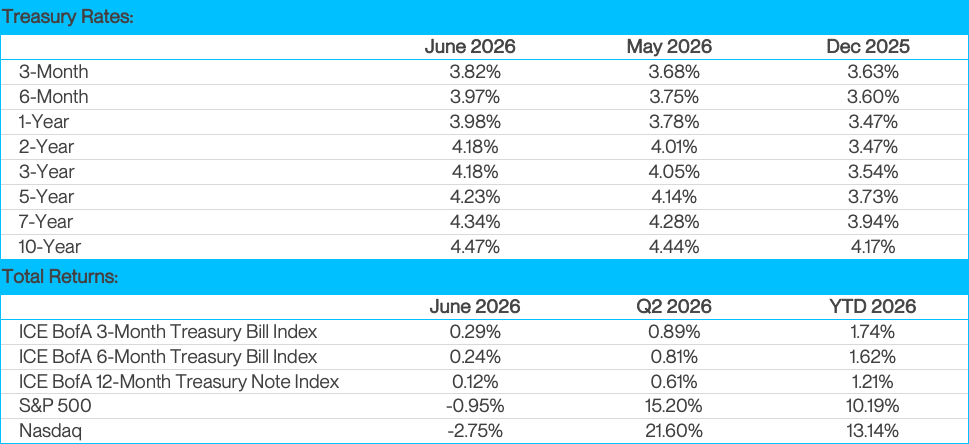
From a market perspective, messaging around price stability resonated most with investors. Expectations for rate hikes increased, which pushed rates higher across the curve. Warsh's strong commitment to achieving 2% inflation reinforces a higher-for-longer bias. The bar for policy easing remains high, and any shift toward accommodation will require clear evidence of sustained disinflation. Furthermore, the introduction of these task forces presents an additional layer of medium-term uncertainty, as potential changes to the Fed's framework—particularly around the balance sheet and inflation targeting— could materially affect how policy is conducted.
Bottom line
Warsh's first FOMC meeting conveyed a decisive shift in both tone and direction. While the policy rate remains unchanged, the broader message is evident: The Fed is entering a period of structural reassessment and recalibration. Under Warsh, the Fed is moving toward a more disciplined, less prescriptive policy framework—one that prioritizes clarity, flexibility and a reexamination of first principles. For markets, this implies a transition away from the predictability of forward guidance and toward a regime defined by greater discretion, stronger inflation commitment and a deeper institutional reset. Of course, we'll be watching to determine how it ultimately affects yields, all areas of the bond market and specific portfolios.



 Article