Why you need to scale startup expense management
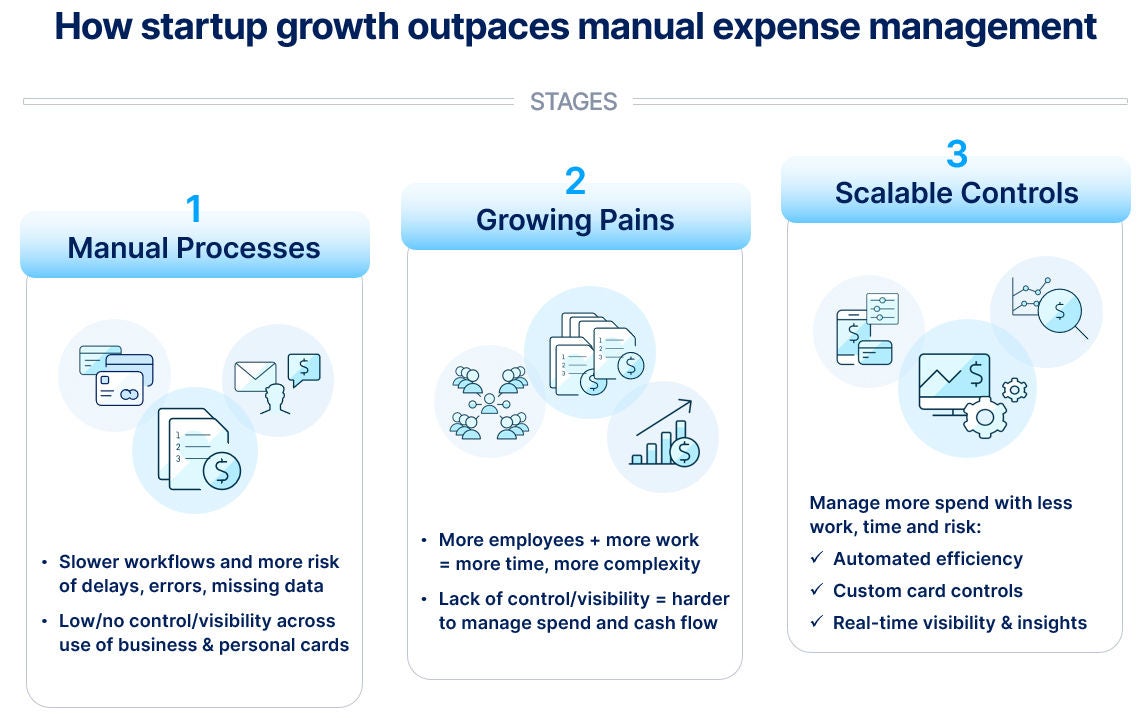
Finance processes that worked at an earlier stage may be slowing you down as the business grows. Your startup expense management might still be a patchwork of business and personal credit cards, manual expense reports in spreadsheets, and emails to remind employees about spend policies. But those inefficiencies can erode productivity and runway. As your company scales, it's critical to also mature your finance workflows with more automated and controlled spend management.
How do you know when it's time to scale your financial operations? And what should you use next? Here I'll touch on common growing pains, and what I recommend to help startup clients stay on track for growth.
Signs your startup has outgrown manual expense management
A frequent complaint in fast-growth startups is the hassle of manual expense reporting. Busy employees are often late in submitting reports, lose receipts or forget details about purchases made weeks earlier. As a result, the finance team increasingly burns time chasing paperwork and reconciling transactions. And with limited visibility into spend before reports and card statements come in at month-end, you might incur more unexpected costs.
Spreadsheets are still the fallback for many finance teams. In fact, 93% of finance professionals use them for daily or weekly reporting, according to a 2025 AFP Benchmarking Survey. But manual tracking is tedious to maintain, and often has gaps in data. When you factor in increasing volumes of employee expense reports, a finance team can quickly get overwhelmed by time-intensive manual work.
Those are sure signals that you need scalable spend management processes to keep pace with your growth.




 Article