The path ahead
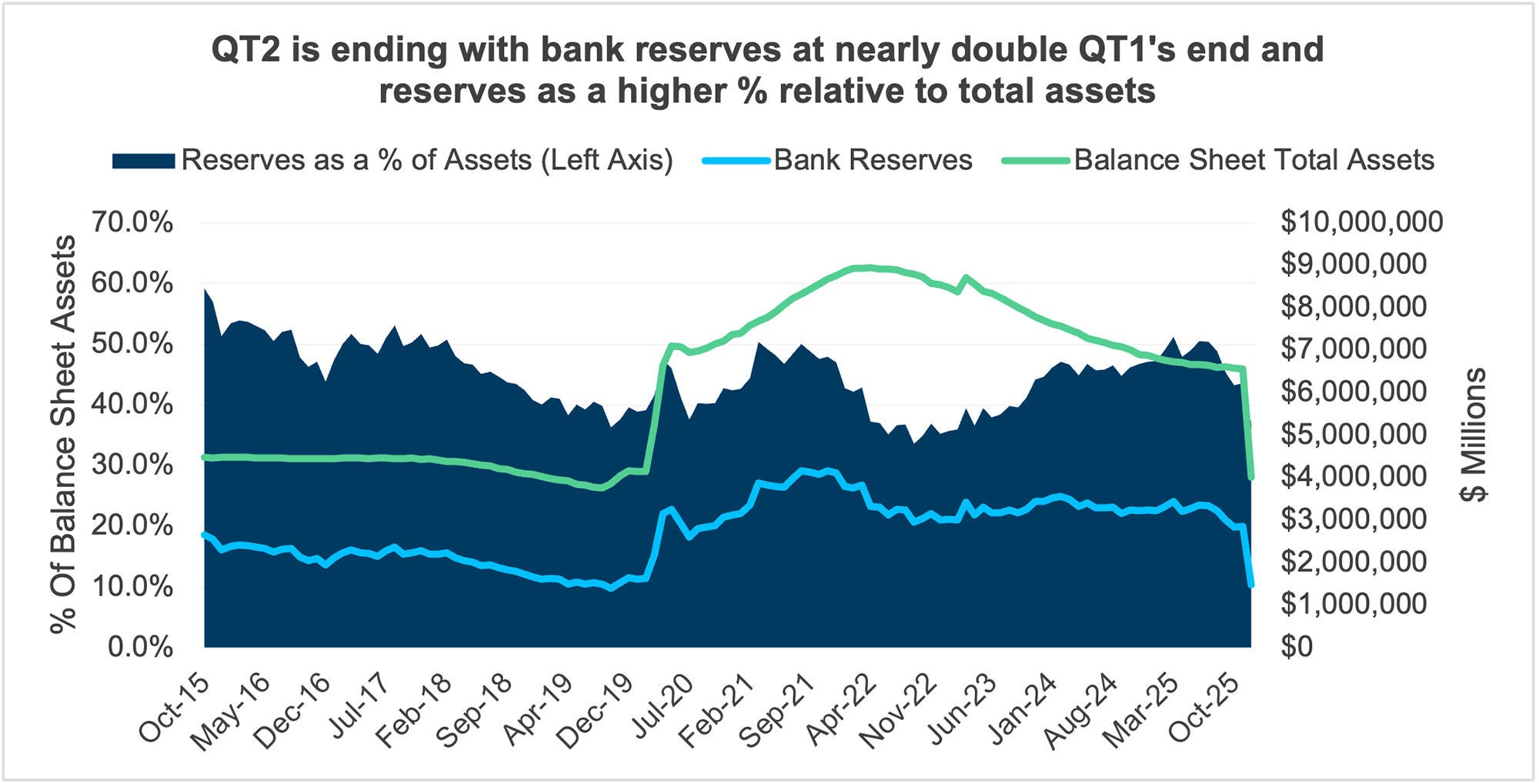
Similar to what transpired in 2019, RMPs are likely to be an important tool used by the Fed in the coming quarters. The QT runoff will be over, and reserves will still decline due to the growth of non-reserve liabilities (like currency in circulation). As such, it follows that some purchases of securities (likely Treasury bills again) in the open market will serve to keep bank reserves and liquidity healthy. It's clear that the Fed is approaching the end of QT2 with the benefit of hindsight, and that's good news for all market participants. As always, we will be monitoring to see if things play out as we expect, and aim to shift portfolios opportunistically in the absence of QT.
Trading vista: Popular themes prevail
Jason Graveley, Senior Manager, Fixed Income Trading
The more things change, the more they stay the same. That's the mantra for fixed income markets as the calendar grinds toward year-end. In other words, we think many of the prevailing challenges that fixed income markets wrestled with this year are expected to continue into 2026. Themes like liquidity fragmentation, dealer balance sheet constraints, monetary policy-induced volatility and market electronification aren't going away anytime soon. That said, we may get more clarity on some key issues that have dominated conversations through 2025. With that in mind, let's unpack some of these themes and think about how they might influence portfolios in the weeks and months ahead.
Liquidity fragmentation and market electronification have been top of mind for many investors, and these two issues are undoubtedly linked. As market participants embrace new advancements across technology and execution platforms, the additional access and the ease of execution have had ramifications for investors. While new technologies and trading platforms can broaden liquidity, they also splinter the market to some extent. More ways to find and execute securities also means there are more places to look for, track and access trades than ever before. This leads to lower utility across each platform, as it's increasingly difficult for dealers to manage risks across four or even five different avenues. As a result, dealers will likely quote smaller size and wider markets to offset volatility. This is likely to emphasize relationship-based trading for specific size and target needs.
As dealers continue their role as market-makers, we acknowledge they have come a long way in balance sheet management in recent years. Long gone are the days where dealers needed to frantically pare down positions ahead of a quarter or year-end. Dealers appear to be keeping less inventory on their balance sheets and appear more conscious of what those positions are. This is likely being driven by two factors.
- For starters, competition for inventory has grown. If we're looking specifically at the front end of the credit curve, for example, there have been anywhere between five and 10 different dealers who have built out networks in response to a shift in client demand and yield dynamics. Even the electronification of markets has put dealers directly in competition with many other market participants, numbering in the thousands. As a result, more buyers and sellers are pricing directly with each other and not facilitating flow through traditional broker-dealers.
- A second key reason is cost, and we know it's usually all about the money! Dealers need to pay a certain amount to use their balance sheet, which is referred to as the cost to fund their book (i.e., funding cost). If the cost of holding the security is higher than the income, then there isn't much incentive to hold inventory. This could lead to a change in pricing dynamics, with dealers bidding more aggressively to maintain market share or stepping back due to limited profit potential.
Volatility rules
Lest we forget, we must talk about rate volatility. The yield on the 2-year Treasury has gone directionally as expected, from 4.38% in January to 3.50% at the time of this writing. However, rate-cut expectations are still fluctuating. Fed Chair Jerome Powell stated that the (potential) December rate cut is "not a foregone conclusion" during the October Federal Open Market Committee (FOMC) press conference, contrary to the market expectation that was fully priced in at the time. Not surprisingly, there were 20 basis points (bps) of volatility just between the FOMC meeting and early November. With potential headwinds from a slowing economy and stubborn inflation still lurking into 2026, monetary policy will continue to be top of mind for the market, and it is likely to cause periodic bouts of volatility.
What does this mean for 2026? With many of today's themes continuing in the foreseeable future, the ability to adapt and be nimble is critical. Evaluating new systems and workflows will continue to be paramount, as will monitoring shifts in the macro environment. Occasional pricing dislocations are likely with the shifting liquidity and volatility, and we expect to be able to take advantage of those opportunities for portfolios.




 Article