Transcript of Chair Powell's Press Conference – December 10, 2025
Trading vista: New year, old story
Jason Graveley, Senior Manager, Fixed Income Trading
With a new calendar comes a fresh new take on markets—or so everyone hopes. But turning the page on the calendar year does little to wipe away much of what we saw through 2025. The same themes that were in place as we closed out 2025 are forecasted to persist into 2026. So how will all this shape expectations in the year ahead?
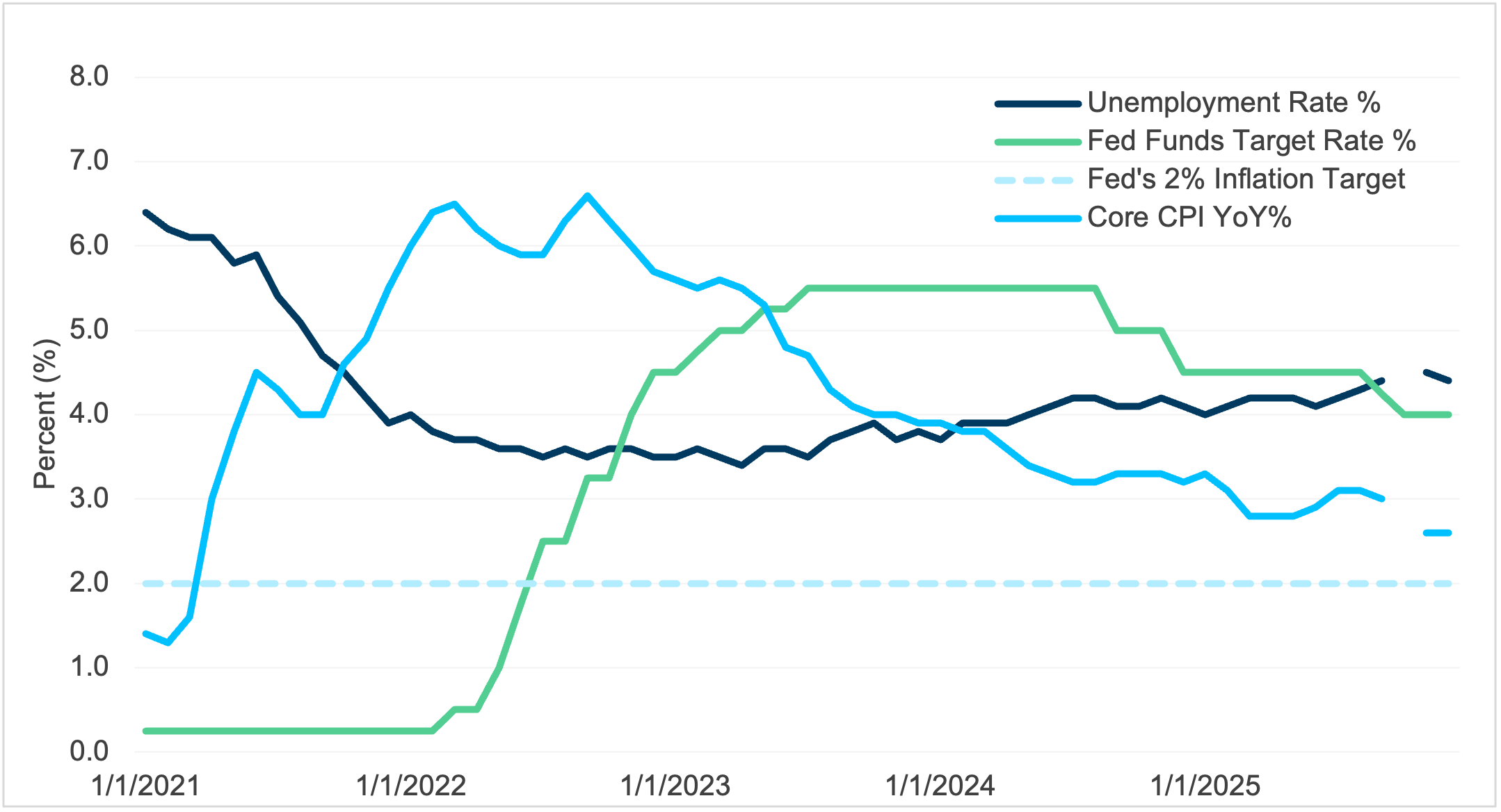
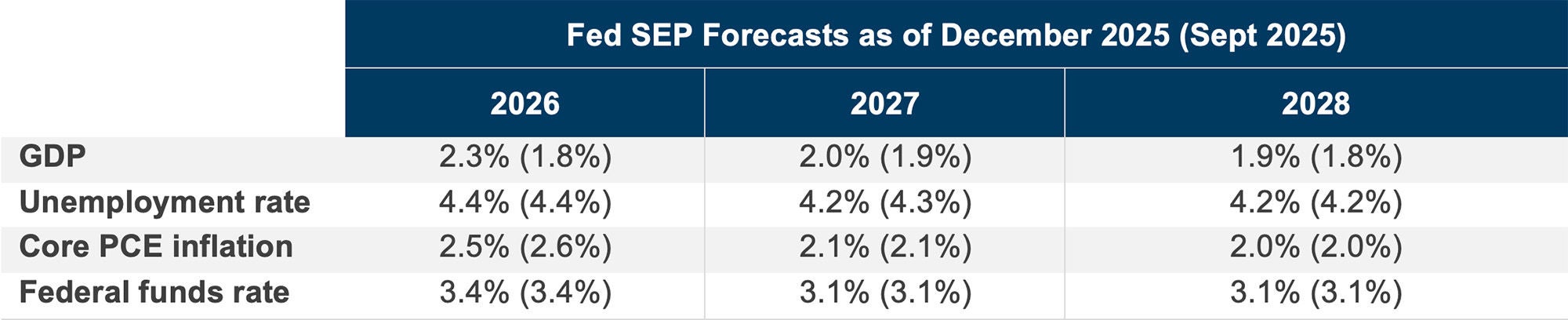
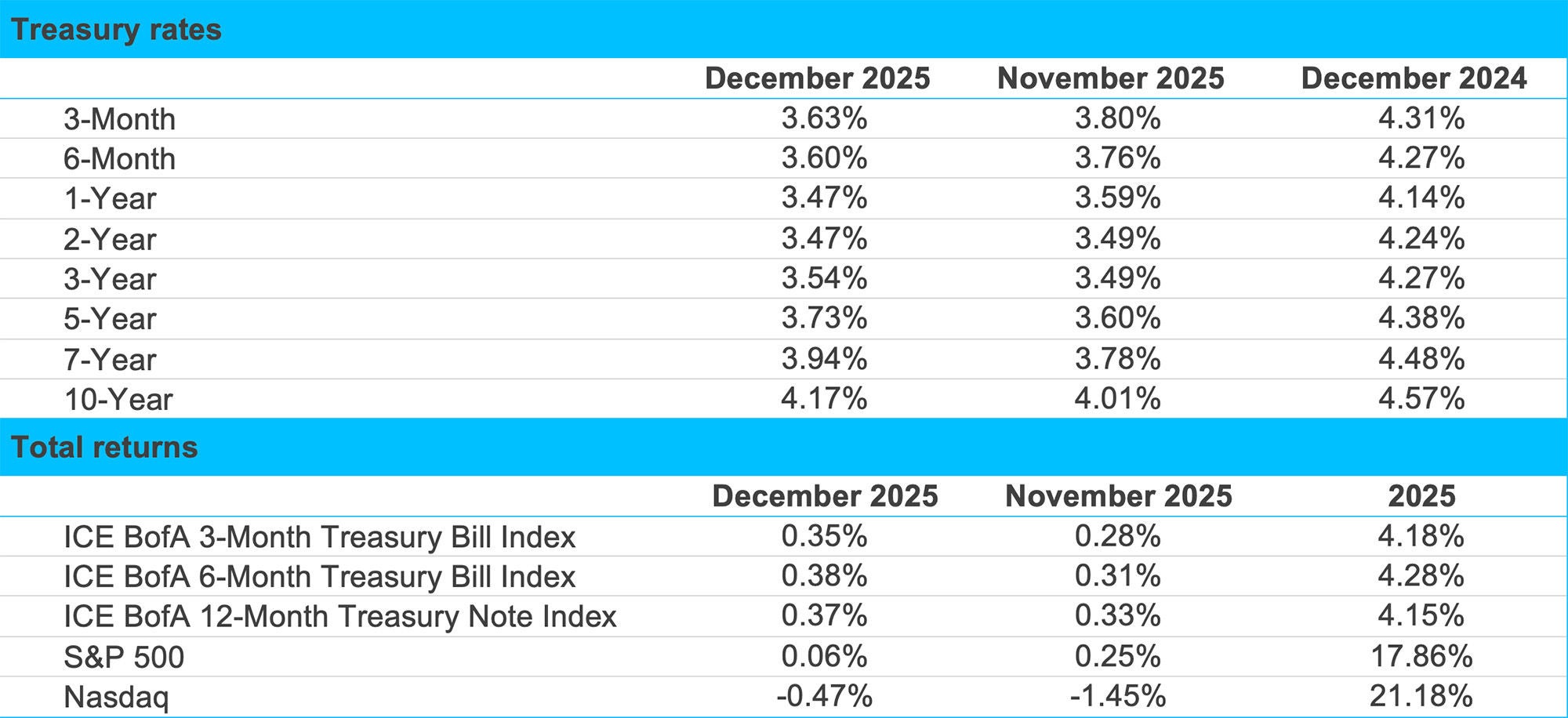
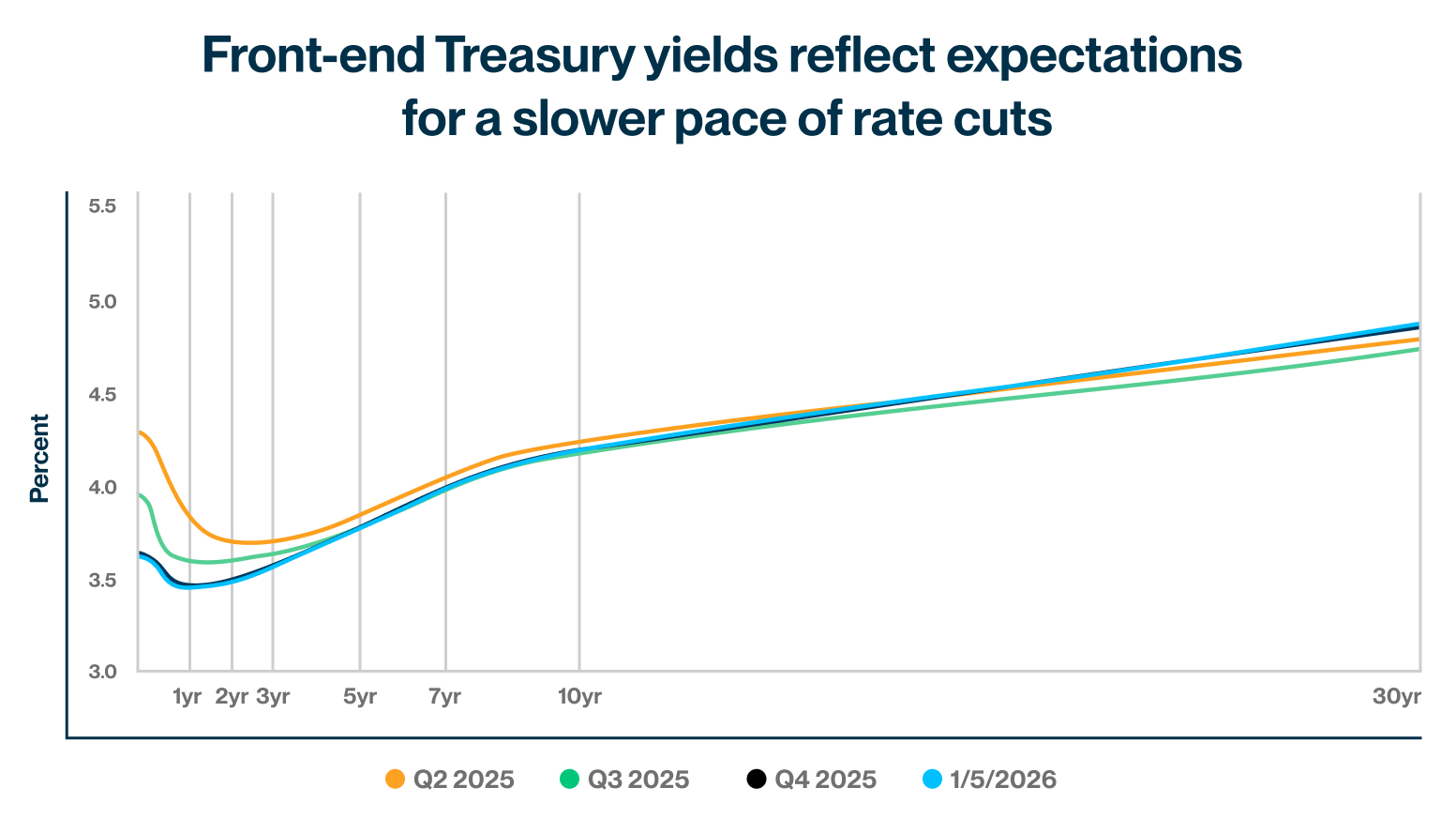
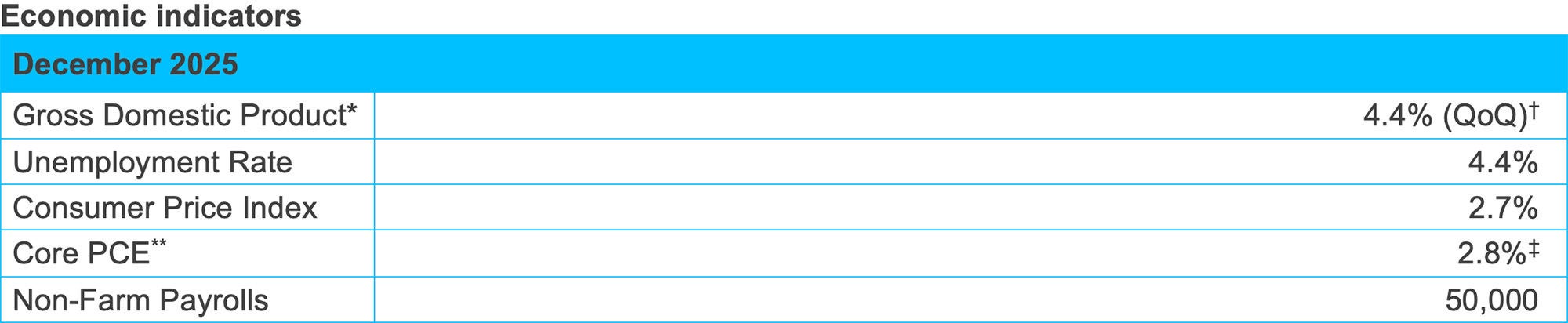
A good place to start is with the Federal Reserve and its evolving monetary policy. The current fed funds target rate is at a range of 3.50% to 3.75%, with the market forecasting two additional rate cuts through the end of 2026. This would bring it to a range of 3.00%-3.25%, where rates could remain in neutral for the foreseeable future. However, there appears to be less conviction around these future rate cuts (an approximate 60% probability) compared to the market's near-certainty for the rate cuts of this past year. This is likely a result of a cautious Fed and the uncertain inflation outlook. Chairman Powell continues to emphasize that future rate cuts will be data dependent, as the committee looks to balance risks across its dual mandate. He also reiterated that the committee is well positioned to wait, which was a central theme through the summer of 2025 before the easing cycle began.
In addition, Chairman Powell's appointment is set to end in May, and President Trump has repeatedly pushed for a more dovish monetary policy stance. Turnover within the Fed, questions regarding inflation and economic growth, and divergent views among some policymakers makes it challenging to forecast the trajectory of future cuts with confidence. In general, financial markets appear to be cautiously optimistic, hoping for more rate cuts but understanding that it's far from a done deal. An emphasis on flexibility seems to be a fitting approach heading into the new year.
Solid demand to start
Despite the continued uncertainty surrounding monetary policy, credit markets are benefitting from strong technical factors and steady client demand. Benchmark rates are expected to remain rangebound, and there doesn't appear to be a short-term catalyst significant enough to push credit spreads materially wider at this time. Even the recent, heightened geopolitical risks have done little to induce broader rate volatility. We have seen some projections suggesting that credit spreads will push slightly wider through the course of the year. However, most of this seems to be a response to how tight credit spreads are today on a historical basis, rather than concerns about potential systemic credit issues. There is only so much more tightening that can occur, so it makes sense to skew projections to the side with more room to run. Spreads may widen some from current levels but are expected to remain below long-run averages. In other words, investors may be more likely to emphasize selectivity and tactfully choose strategy and duration points of entry.
Given the current expectations for rangebound rates, tight spreads and continued strong client demand, we would also expect another robust year in terms of corporate issuance. The environment is very enticing for companies that wish to raise capital. After all, who can say no to cheap funding! The previous year finished with close to $1.6 trillion in total issuance, second only to the COVID-fueled and low-rate binge that occurred in 2020. We see 2026 continuing that trend, with forecasts for January new issuance ranging from $200 to $225 billion, which would make it the largest first month in history. Full year forecasts range as high as $1.8 trillion, which also would be a record. Refinancing needs, capital expenditure spending, and potential mergers and acquisitions should conspire to drive demand. In fact, there are over $1 trillion in investment grade bonds maturing this year alone, so client demand should keep pace with the increase in supply.
We may have turned the calendar page, but the overall market dynamics from late last year remain in place. Is it a new year with the same old story? We'll be watching to see how it all unfolds.
Markets





 Article