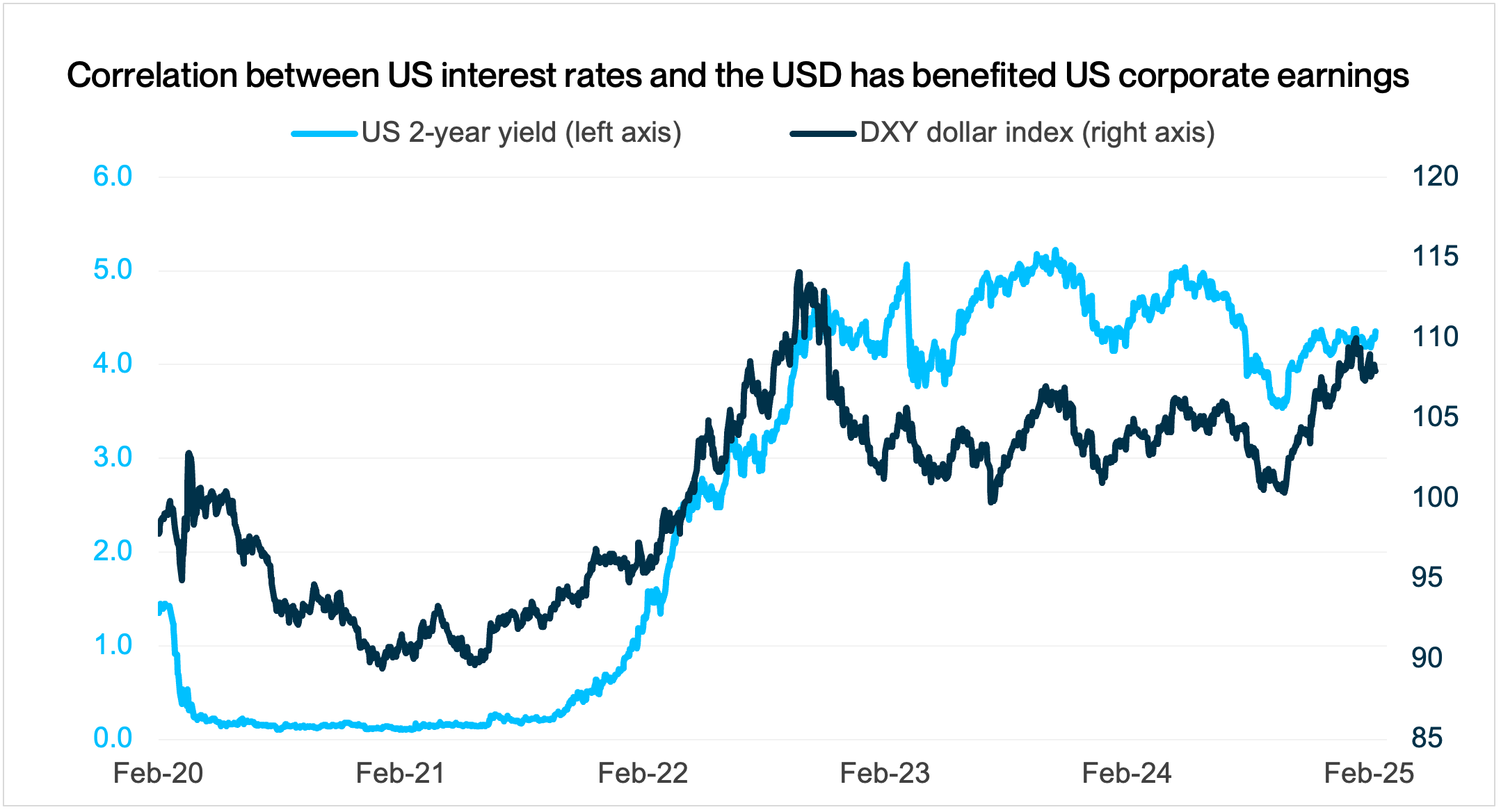
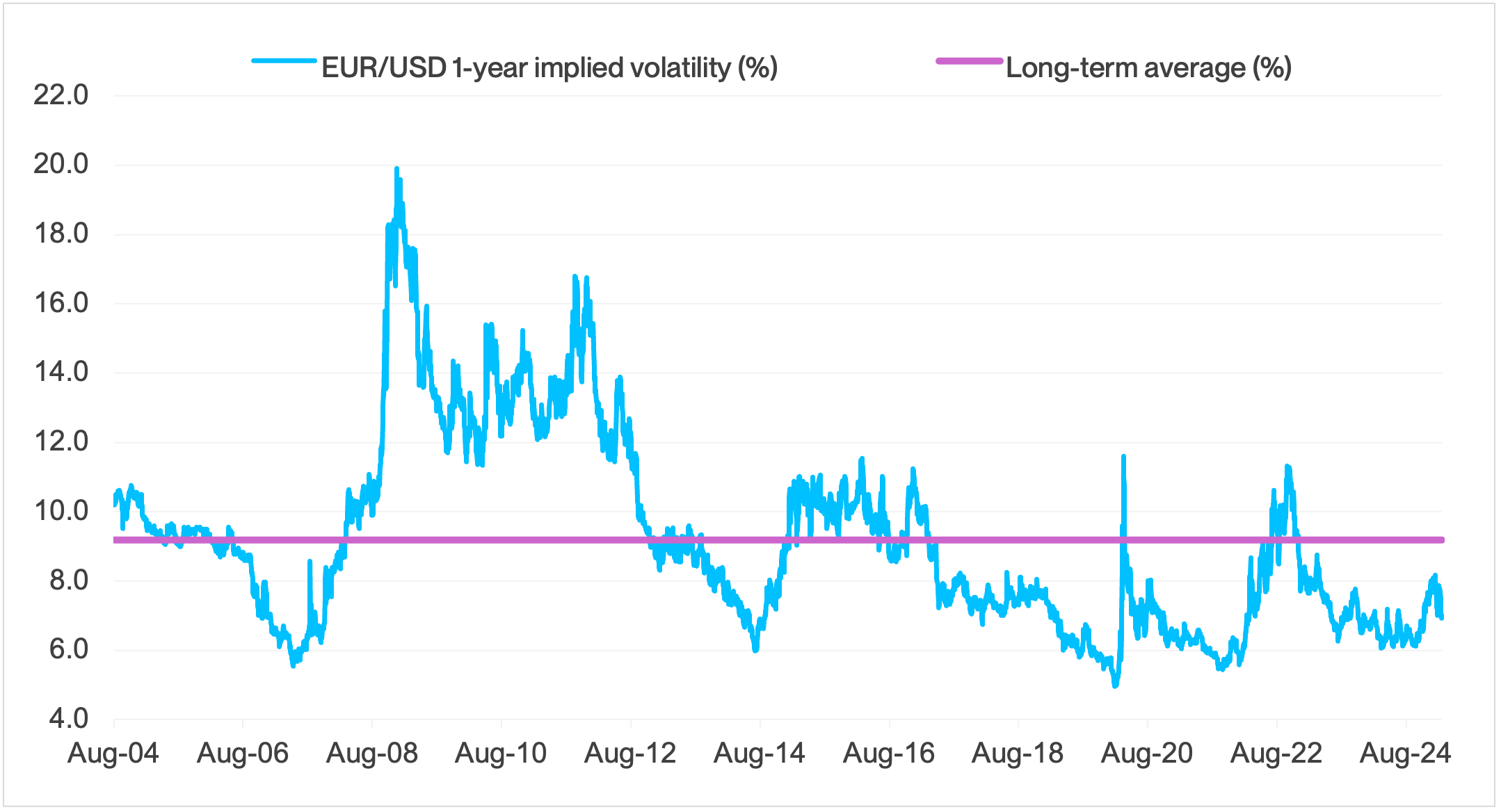
The windfall has been particularly beneficial for high-growth technology and life science companies, helping to ease their cash burn rates and offset the challenges presented by a tougher fundraising environment and higher cost of capital. For global public companies, there have been unexpected FX risk management benefits. Revaluation of foreign assets and liabilities (aka remeasurement) may be destabilizing to earnings if not addressed. Generally, the FX volatility created from such remeasurement activity can be remedied by implementing balance-sheet hedging programs, which deploy forward contracts to create synthetic offsets within current income. The new income streams from holding cash and short-term investments, which also run through current income, have worked to smooth earnings, serving as a natural hedge of FX remeasurement volatility.
Time to extend and hedge?
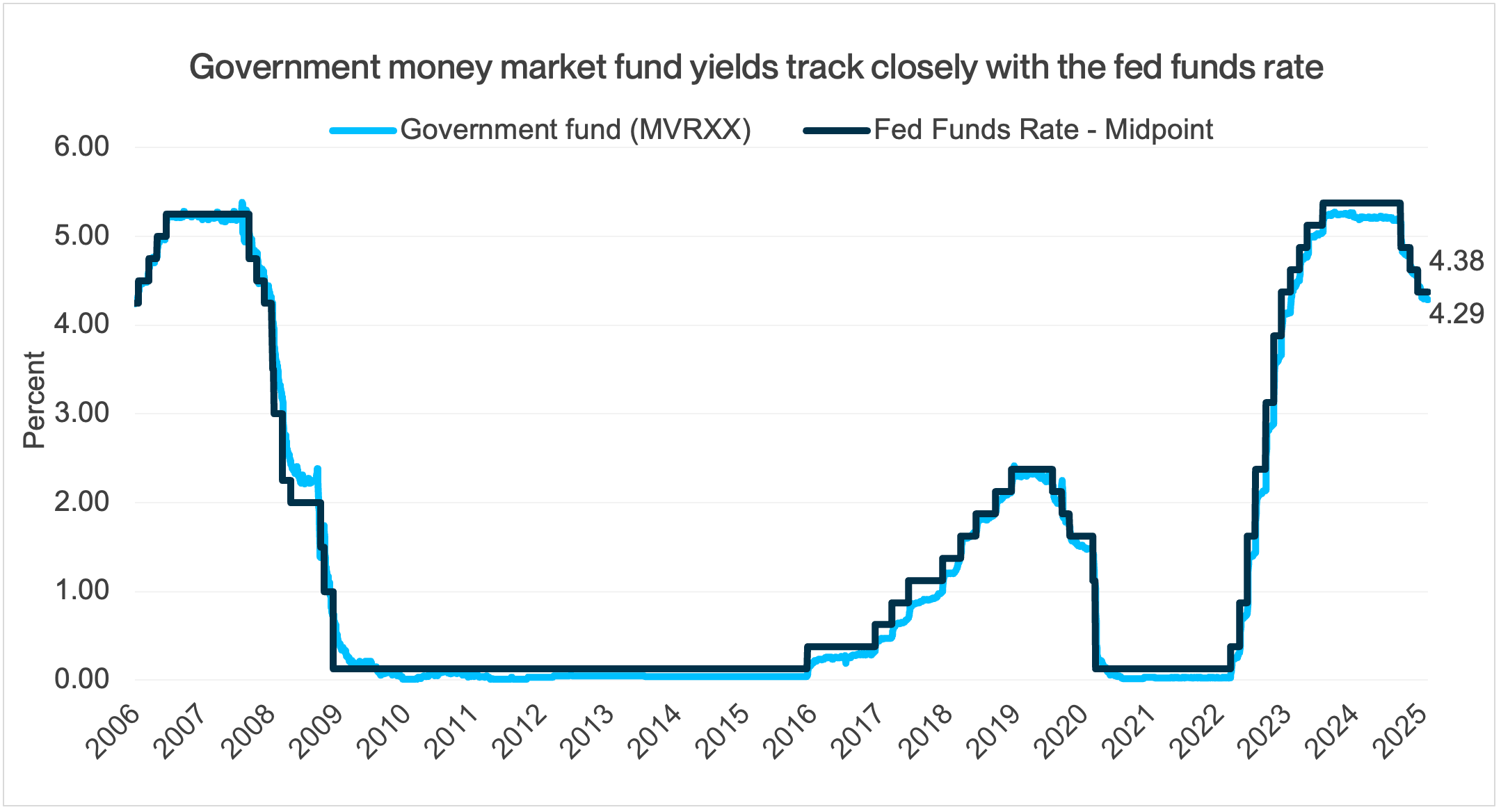
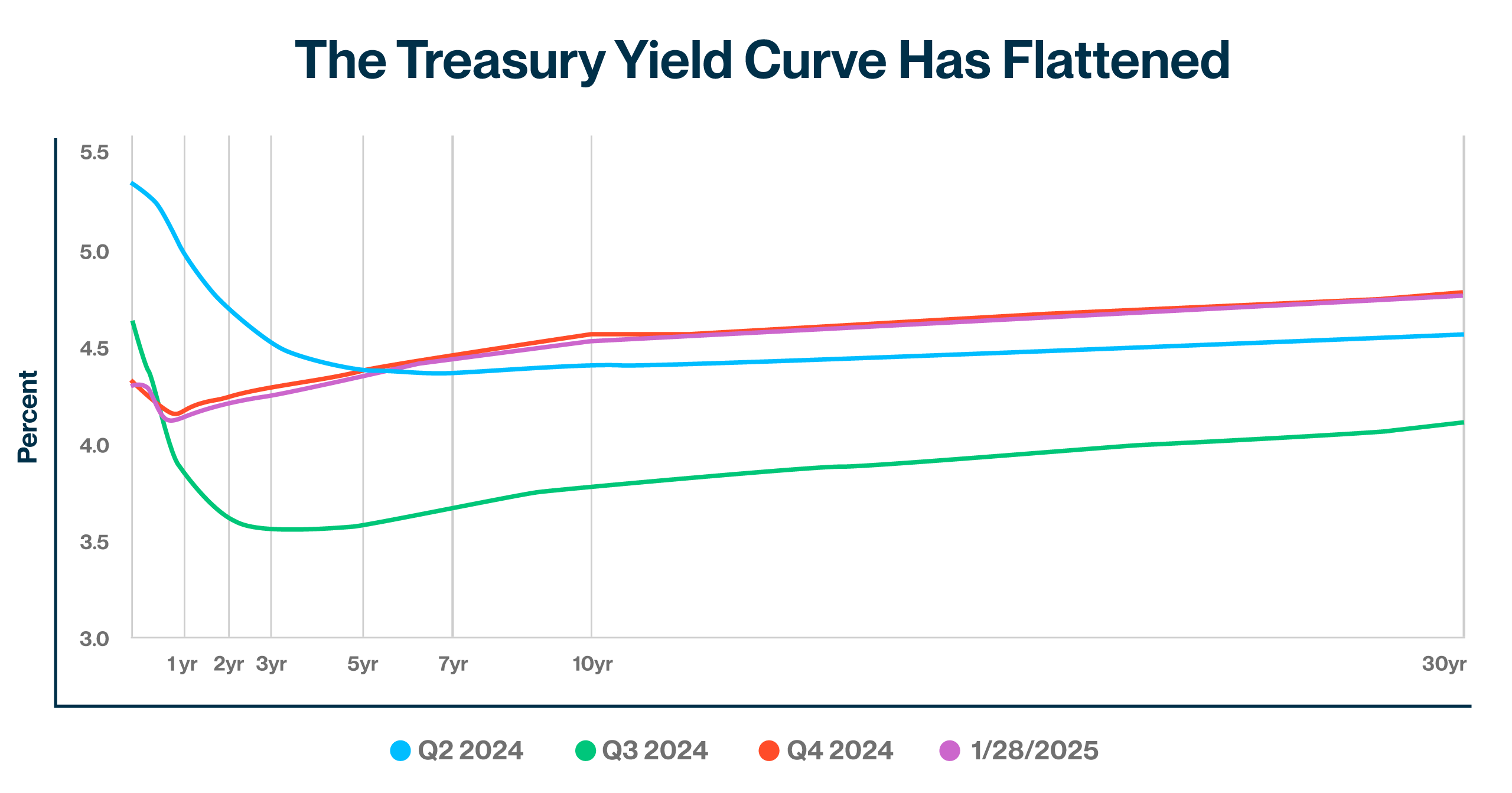
Looking ahead, however, this dual windfall may be turning into a dual headwind as the trajectory for both rates and FX has reversed. After raising the fed funds interest rate 11 times during the most aggressive rate-hike campaign on record in 2022/2023, the Fed cut rates 100 bps in its final three meetings in 2024. While the pace of rate cuts has slowed, there are one or two additional cuts now expected for 2025, which will be realized if additional progress is made on getting inflation closer to the Fed's long-term target of 2.0%.
Without the boost of higher interest rates and wider interest rate differentials, the USD will likely struggle to make new highs. Furthermore, the post-election USD bull drivers seem to be waning. Concerns of increased government spending, which would likely lead to higher yields and a stronger USD, appear to be subsiding due to early efforts by the Department of Government Efficiency (DOGE). Tariff anxiety, which reignited inflation expectations, is also cooling as tariff threats are perceived to be negotiation tools, not a basis for real policy. As always, it's an ever-evolving situation that bears scrutiny. But the reversal of those prior trends for the USD would erode the dual windfall enjoyed recently by domestic companies.
Develop an action plan
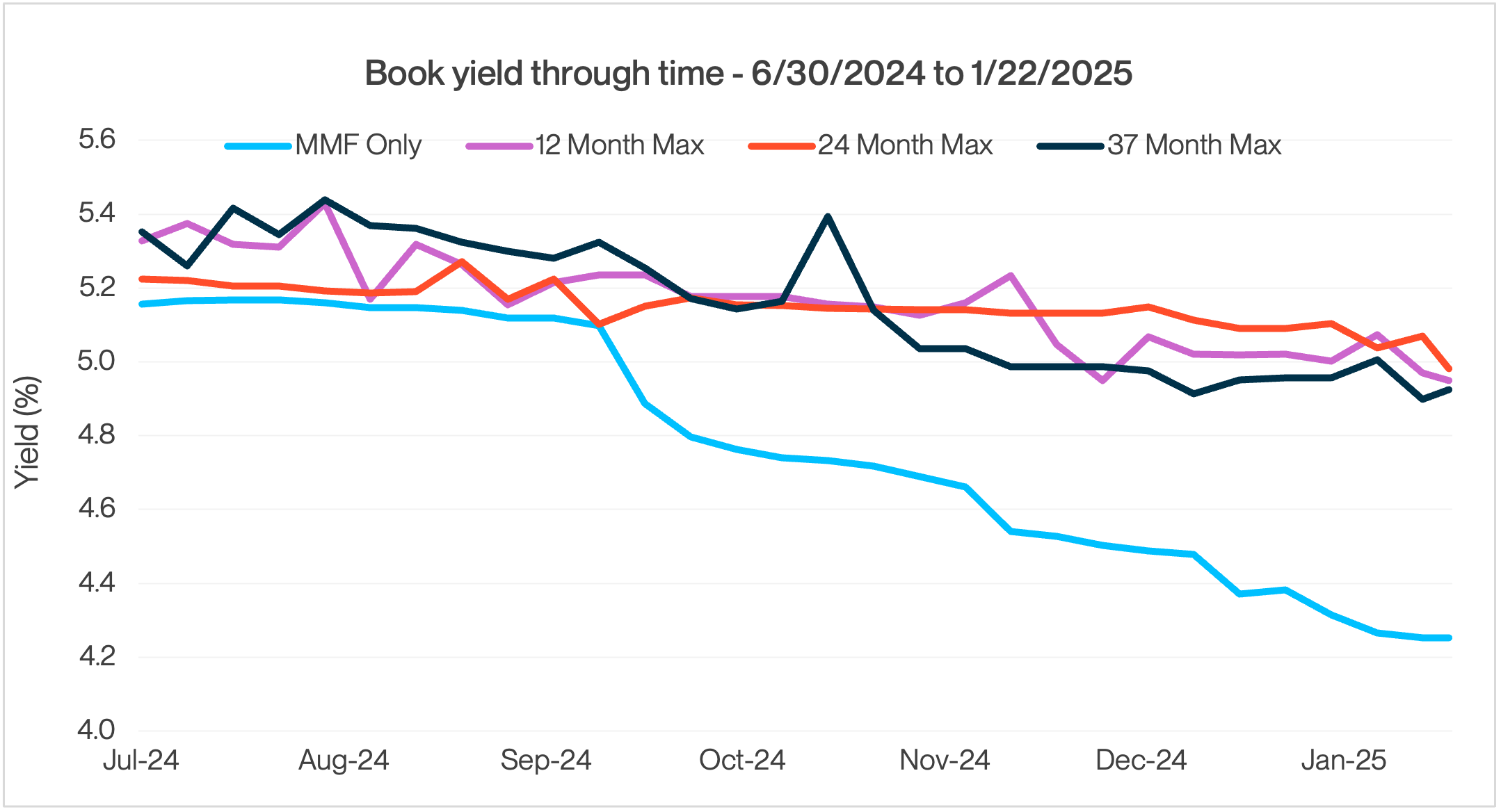
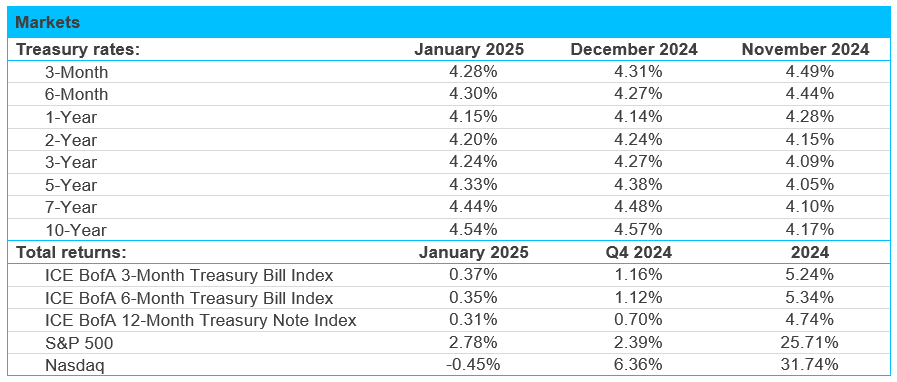
There's no arguing that money market fund yields remain attractive at rates around 4.30%. However, when the Federal Reserve reduces rates, money market fund yields are typically the most responsive. In other words, when the Fed cuts, money market yields will no doubt quickly adjust lower. That could be trouble for complacent investors that have overweight cash balances parked in money market funds.
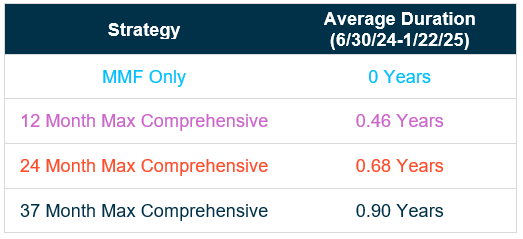
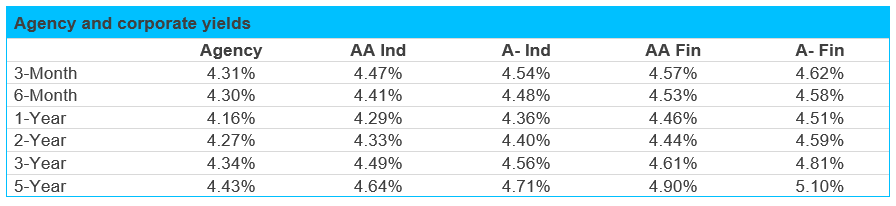
But there's still time, and investors may be able to preserve today's attractive yields by extending the duration of their portfolios. For example, 1-year Treasuries yield around 4.35% at present value if market expectations for Fed rate reductions are realized. In addition, investors may be able to capture additional yield by investing in commercial paper, corporate bonds, and/or asset-backed securities, which are trading at yield spreads above Treasuries.
An additional benefit of extending the duration in a portfolio is that it reduces the amount of income that needs to be forecasted. We've pointed out that money market fund yields are likely to adjust lower quickly once the Fed begins reducing the policy rate. The timing and extent of those rate cuts can only be estimated, and recent history illustrates that the futures market is not always an accurate predictor. In addition, inflation and labor data can change—often surprising market pundits—and the Fed has repeatedly demonstrated that it is not afraid to be "data dependent" no matter what the market wants. On the other hand, 1-year Treasury and corporate bond yields are known at the time of purchase and thus can provide clarity and steady income until they mature. For many companies, this clarity may be more valuable than rolling the dice to capture an extra few basis points.
Although every situation is different, in general we would recommend taking an incremental approach to extending duration. For example, a barbell strategy can be used to maintain a buffer of cash to be invested in money market funds to meet near-term liquidity needs. Then, investors can redeploy the balance of the portfolio in 1- to 2-year bonds to lock-in yields for a longer duration. This strategy may preserve liquidity while also locking in attractive yields, and it represents one possible action plan to consider in the current environment.




 Article