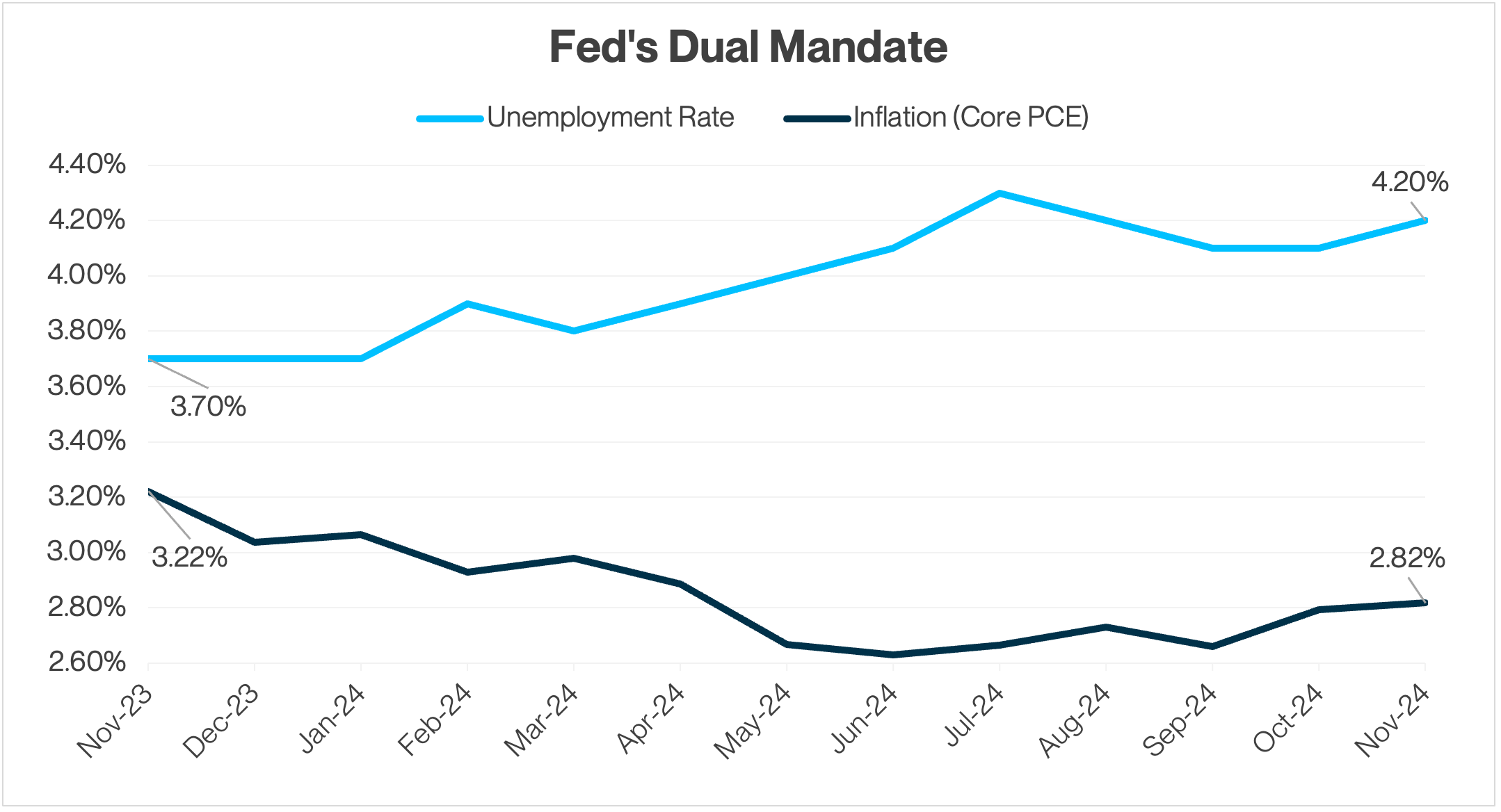
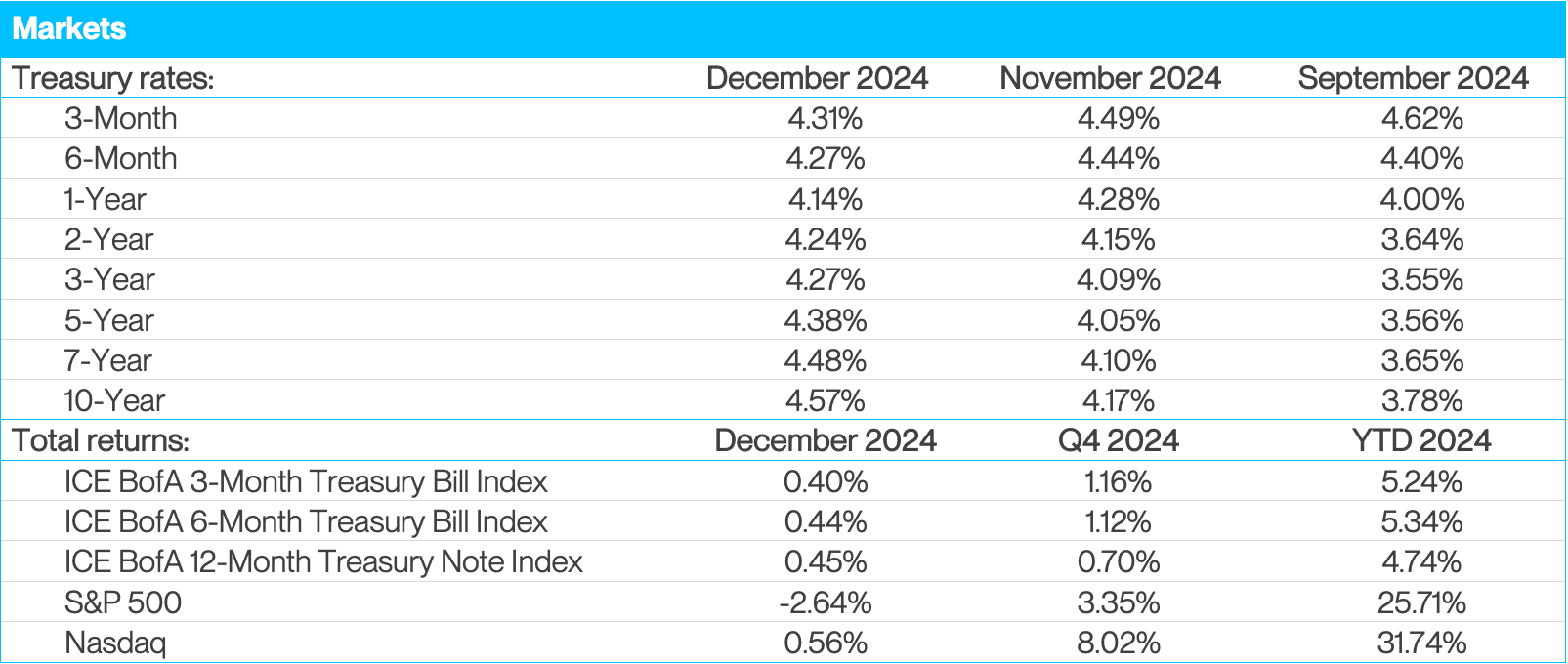
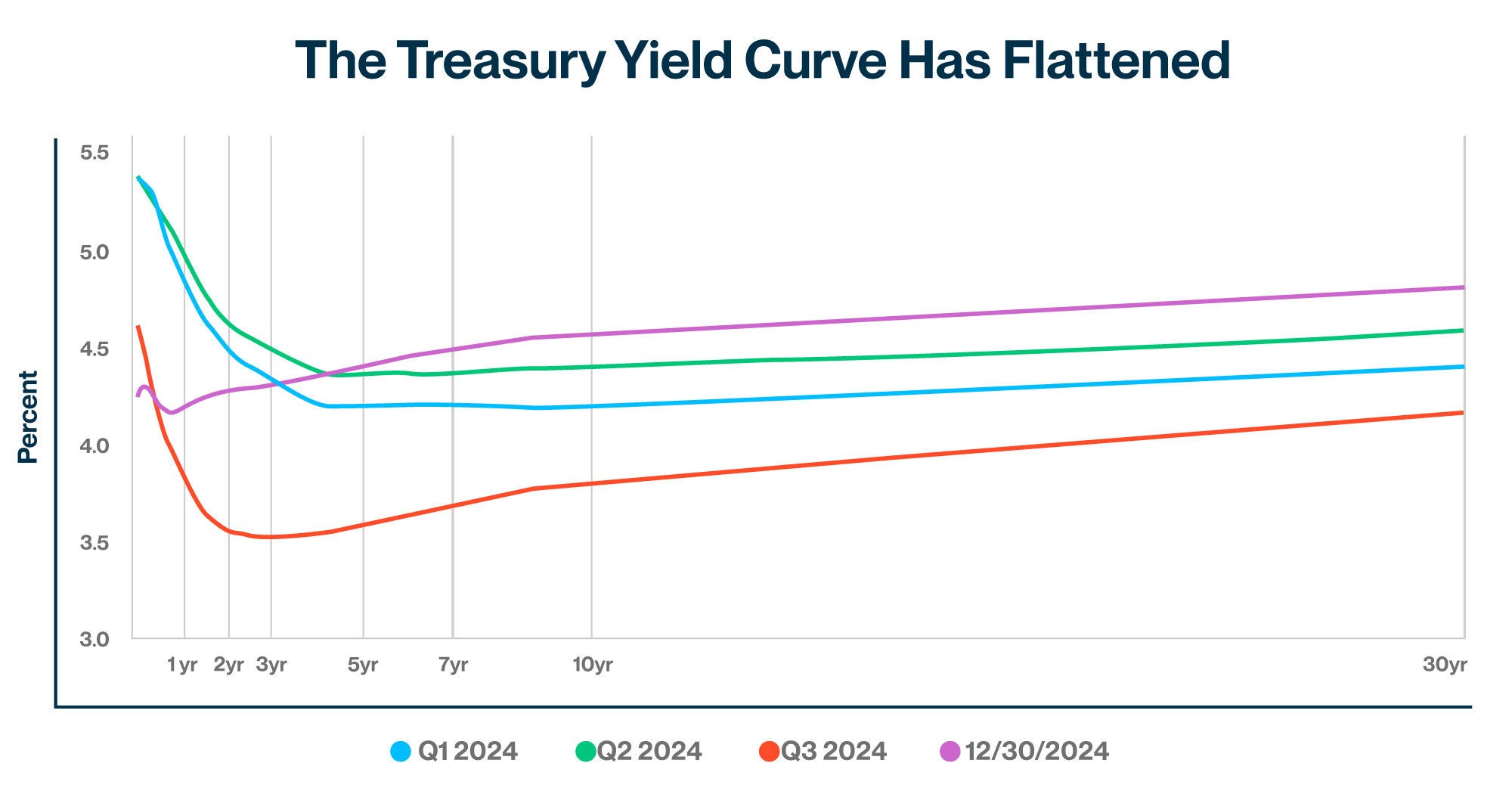
At the conclusion of the December FOMC meeting, the Federal Reserve cut the fed funds rate for a third straight time following cuts in September and November. However, Fed Chairman Jerome Powell lowered expectations for future rate cuts based on the positive outlook for the US economy. Still, markets ended the year pricing in two more 25-basis point cuts in 2025.
Looking ahead
As we look ahead to 2025, the Federal Reserve's current policy stance remains supportive for the markets. We see the US economy continuing to build on the momentum from the previous year. This positive outlook is further bolstered by expectations of lower interest rates and the anticipated arrival of the pro-business policies of a new Presidential administration. However, as 2024 clearly demonstrated, risks remain, and market participants will need to navigate several uncertainties. For example, the administration's pro-growth initiatives might be offset by the introduction of tariffs should they prove to be inflationary. Heightened geopolitical tensions remain a significant concern as they can disrupt global trade and economic stability. Additionally, the lingering effects of inflation continue to pose challenges, potentially affecting consumer spending and corporate profitability.
Of course, we will be closely monitoring corporate balance sheets and earnings reports to gauge the financial well-being of companies. The technology sector, and in particular companies involved in AI, is likely to remain a focal point for investors due to its potential for continued innovation and growth. So, while there are some challenges ahead, we remain cautiously optimistic when it comes to financial markets in 2025. As always, we intend to monitor the risks and act opportunistically whenever possible.
Trading vista: The party rages on
Jason Graveley, Senior Manager, Fixed Income Trading
So much for a holiday hangover. The New Year got off to a banging start as new issuance markets appear primed to continue the party.
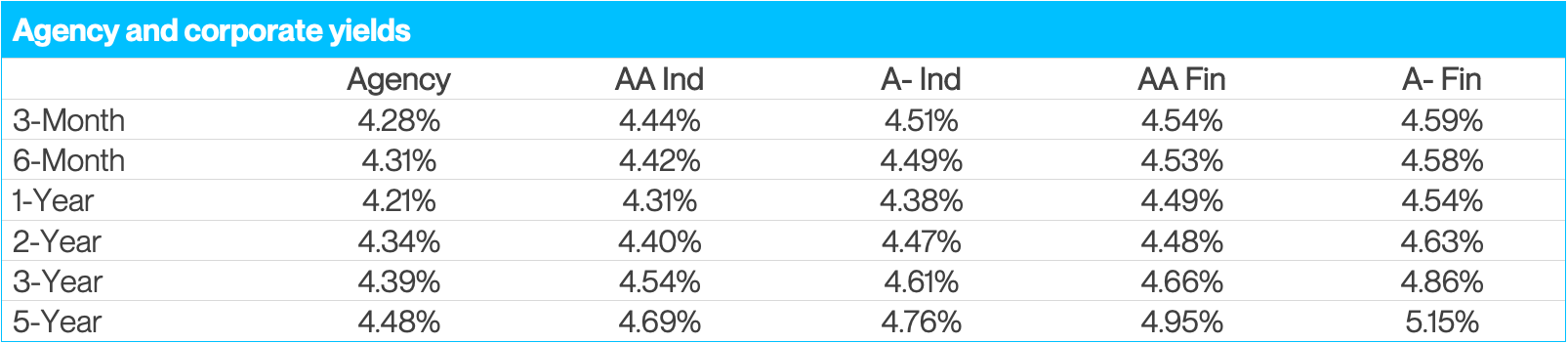
Remember, 2024 ended with roughly $1.5 trillion in investment-grade issuance, which just happened to be the second-highest level on record after the debt-fueled explosion of 2020. But despite the significant new supply and intermittent bouts of volatility, primary spreads held for most of the year and are at some of their tightest levels since the late 1990s. Naturally, concession levels were tight last year, with the difference between primary issuance and secondary trading only averaging approximately four basis points.
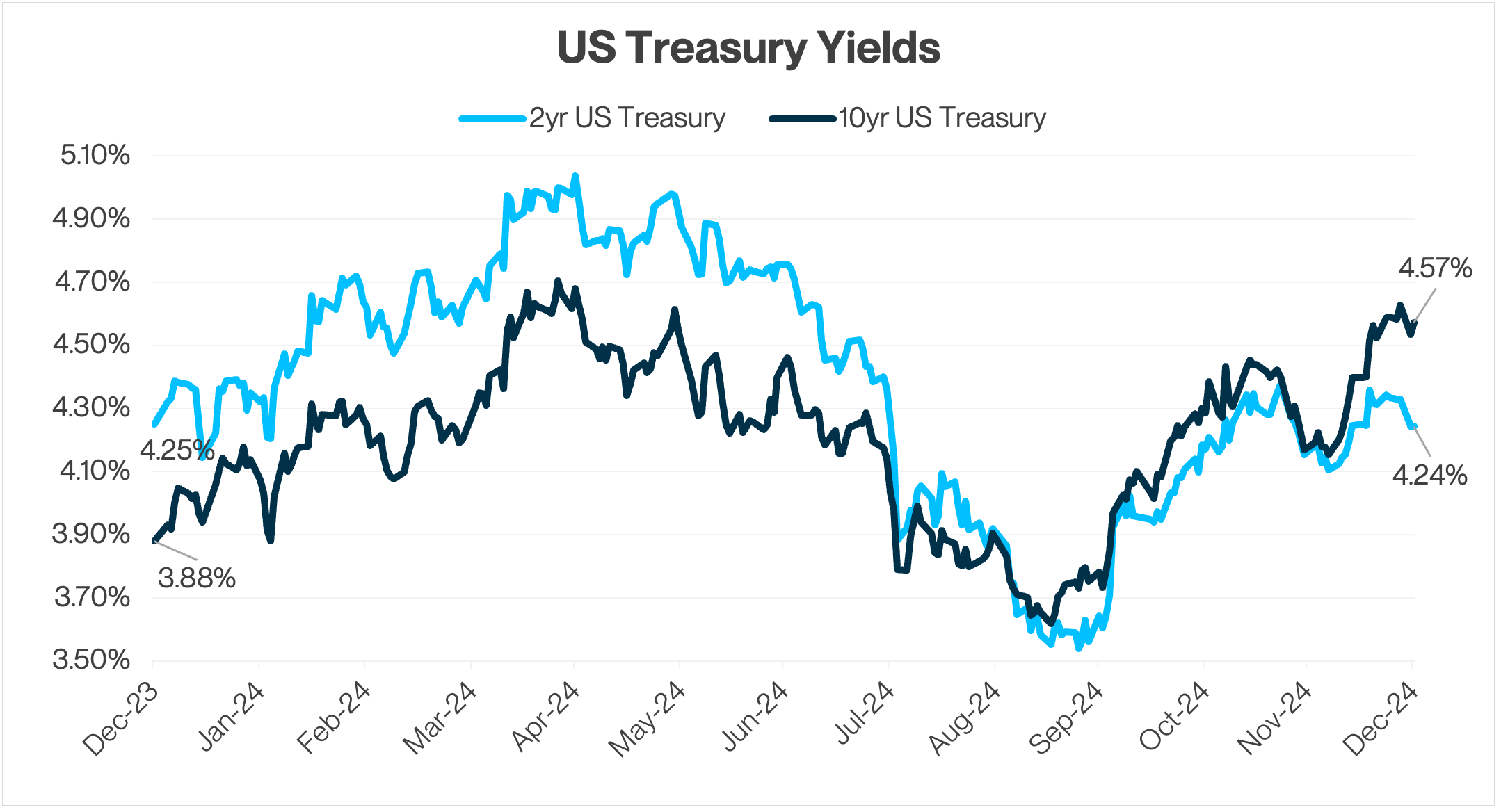
To further illustrate the impressive market dynamics, consider that oversubscription levels were roughly 3.7 times greater than supply in the past year. With that in mind, investors shouldn't be surprised why the new issuance party has rolled into 2025. Technicals are working in the issuer's favor, and investors seeking attractive absolute yields have been coping with robust demand and tight spreads. Furthermore, there has been little benchmark volatility to start the year, with 2- and 5-year Treasury notes within a few basis points of their year-end closes. It's been an optimal setup to start the new year.
How good has the environment been? On the first full Monday of 2025, more than 22 issuers priced close to $37 billion of bonds. As is often the case, the slate was headed by domestic banks and financial services companies. This was the largest day of issuance since September 2024, when a record 29 companies came to market and priced over $43 billion. All told, activity for the first week of January blew through estimates by the end of Tuesday, which brought the weekly total to nearly $55 billion versus estimates of $50 billion. The consensus estimates for total primary issuance in 2025 is now expected to be slightly above 2024, which would make 2025 the new second-highest year on record.
Of course, these are only estimates and predictions vary widely across the bank syndicate desks, with some banks calling for close to $2 trillion in total investment-grade issuance. That figure would easily top the $1.75 trillion that was priced in 2020.
One key reason for such optimism is simply a byproduct of the record-setting year in 2020. We are now five years removed and there is nearly $1 trillion expected to mature this year as a result. That's a lot of corporate debt being retired or rolled over. But remember, these new issuance projections are only estimates and can shift quickly if markets flip. Investors don't like uncertainty, and there are ample reasons we may see periods of heightened volatility. Geopolitical hotspots abound, an incoming administration is implementing policies that might prove inflationary, and nobody can predict central bank moves with real certainty. So, while the issuance party is off to an optimal start, it's the follow-through that will set the stage for an encore. We'll be watching and positioning no matter what happens.





 Article