


Economic vista: Changing expectations?
Jose Sevilla, Senior Portfolio Manager
Looking in the rear-view mirror, it's clear that there was no lack of drama for financial markets in 2025. In fact, the year might be best characterized by some sizable policy shifts that also changed investor expectations. For example, trade policies shifted early in the year and roiled markets. Expectations for monetary policy shifted several times until the Federal Open Market Committee (FOMC) finally became more accommodative and cut rates late in the year. Thus, we should not be surprised that both fixed income and equity markets experienced their share of volatility. Looking ahead, one must wonder: Does 2026 have more such shifts in store for investors?
Looking back
Many investors began the year rooted in optimism—inflation appeared to be cooling, consumer spending was resilient, and there were widespread expectations of multiple rate cuts by the Fed. However, this optimism quickly faded and transformed into something more complex. Tariff-driven inflation risks, a gradually weakening labor market and unpredictable Fed policy repeatedly reset investor expectations. Layered onto this backdrop was the powerful rise of artificial intelligence (AI), which fueled long-term enthusiasm about productivity gains while injecting bursts of short-term volatility into markets.
At the start of the year, the Fed's policy trajectory looked relatively clear. Inflation had eased through late 2024, economic growth remained steady and investors broadly expected meaningful rate cuts by mid-year. In response, Treasury yields drifted lower as markets positioned for a shift to a more accommodative policy. But sentiment soured quickly once the Trump administration began hinting at severe new tariffs. Each adjustment in tone sent yields swinging, forcing investors to reassess whether renewed trade tensions might keep inflation higher for longer and further delay any Fed easing. Bond markets turned volatile as inflation expectations were recalibrated, business investment softened, consumer confidence slipped and hiring moderated.
In the first few FOMC meetings of the year, the Fed kept rates unchanged as growth projections were lowered while inflation projections were recalibrated higher. Policymakers signaled they needed more definitive signs of cooling inflation before implementing rate cuts. Investors increasingly believed that any shift to lower rates would hinge not only on moderating inflation, but also on sustained labor-market easing.
By spring, the sweeping "Liberation Day" tariff package sparked one of the year's sharpest market reactions. Yields spiked as inflation expectations jumped, only to fall back when the administration softened some provisions. The episode underscored how sensitive fixed income markets had become to even small shifts in policy. Through the second quarter, yields steadied as investors gravitated toward safety, favoring Treasuries and other high-quality, short-term instruments. Meanwhile, the Fed reiterated its patient, data-driven stance. Uncertainty persisted, and bond markets continued to respond swiftly to every inflation report, labor-market update and tariff development.
Equity markets also experienced a similarly turbulent path given the policy shifts. The year began with solid gains driven by healthy earnings and rate cut optimism. But as tariff announcements multiplied, sectors tied to global trade—industrials, consumer discretionary and materials—stumbled. Technology stocks remained the standout exception, with AI-focused companies outperforming and drawing investor interest even during periods of heightened volatility. Their resilience provided a stabilizing counterweight to weakness elsewhere.
When GDP growth rebounded to nearly 4% annualized at midyear, equities rallied. Recession fears faded, and the Nasdaq led the charge higher, once again fueled by companies linked to AI-powered innovation. However, momentum slowed in the fall as ongoing geopolitical tensions, trade disputes with China and a prolonged government shutdown weighed on sentiment.
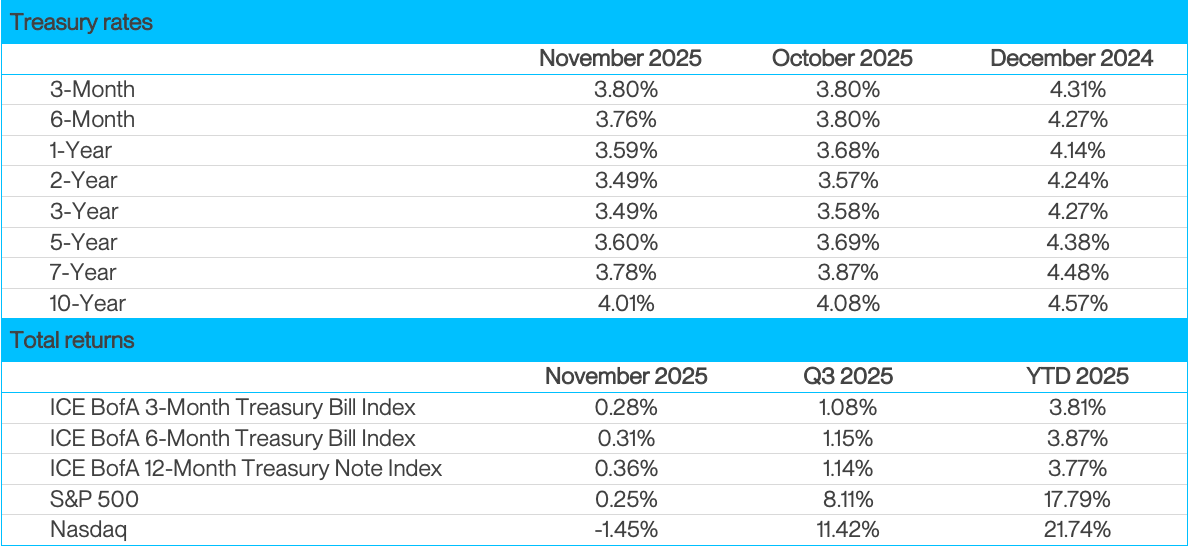
In terms of monetary policy, the path got slightly clearer as we moved deeper into the third quarter. The Fed highlighted mounting evidence of a cooling labor market, which set the stage for the first rate cut of 2025. At the September FOMC meeting, the committee lowered the fed funds rate by 25 basis points (bps) to a range of 4.00%–4.25%. Even with the shutdown restricting access to fresh data, the Fed proceeded with another 25-bps cut in October, citing concerns that a weakening labor market could push the economy toward recession, even as inflation remained above target.
By December, those same concerns were still front and center. At the December FOMC meeting, the Fed delivered a third straight 25-bps cut, bringing the target range down to 3.50%–3.75%. Policymakers acknowledged that inflation had eased somewhat, but they also made it clear that the job market was losing momentum and needed support. No doubt the Fed will reinforce its mantra that future moves will be contingent on incoming data rather than preset timelines. Of course, investors will be parsing every word the Fed utters to decipher the likelihood and timing of any future rate moves.
Looking ahead
Looking ahead to 2026, the trajectory of Fed policy will hinge on how quickly inflation converges toward the 2% target and whether labor-market weakness deepens. If that happens, the Fed may have room to deliver additional cuts next year, potentially bringing the policy rate closer to 3.25%. Such a path would provide relief to credit markets and support a rebound in economic activity. Equity markets may face bumps in the road, though we would not be surprised to see continued strength concentrated in certain sectors. AI-driven companies should continue to attract capital and drive productivity narratives, while trade-sensitive sectors may struggle under the weight of ongoing tariff disputes and geopolitical uncertainty. For the broader US economy, 2026 could prove to be a transitional year—one where Fed policy gradually shifts from fighting inflation to fueling growth. With the Fed's decision to cut a third consecutive time, the shift may already be starting. Innovation and productivity gains could set the stage for stronger growth, but global uncertainty and policy risks may continue to complicate the landscape. Investors will need to adapt. We’ll be watching closely and will adjust portfolios along the way. Happy New Year!
Credit vista: What's driving MMFs?
Michael Duranceau, Senior Credit Analyst
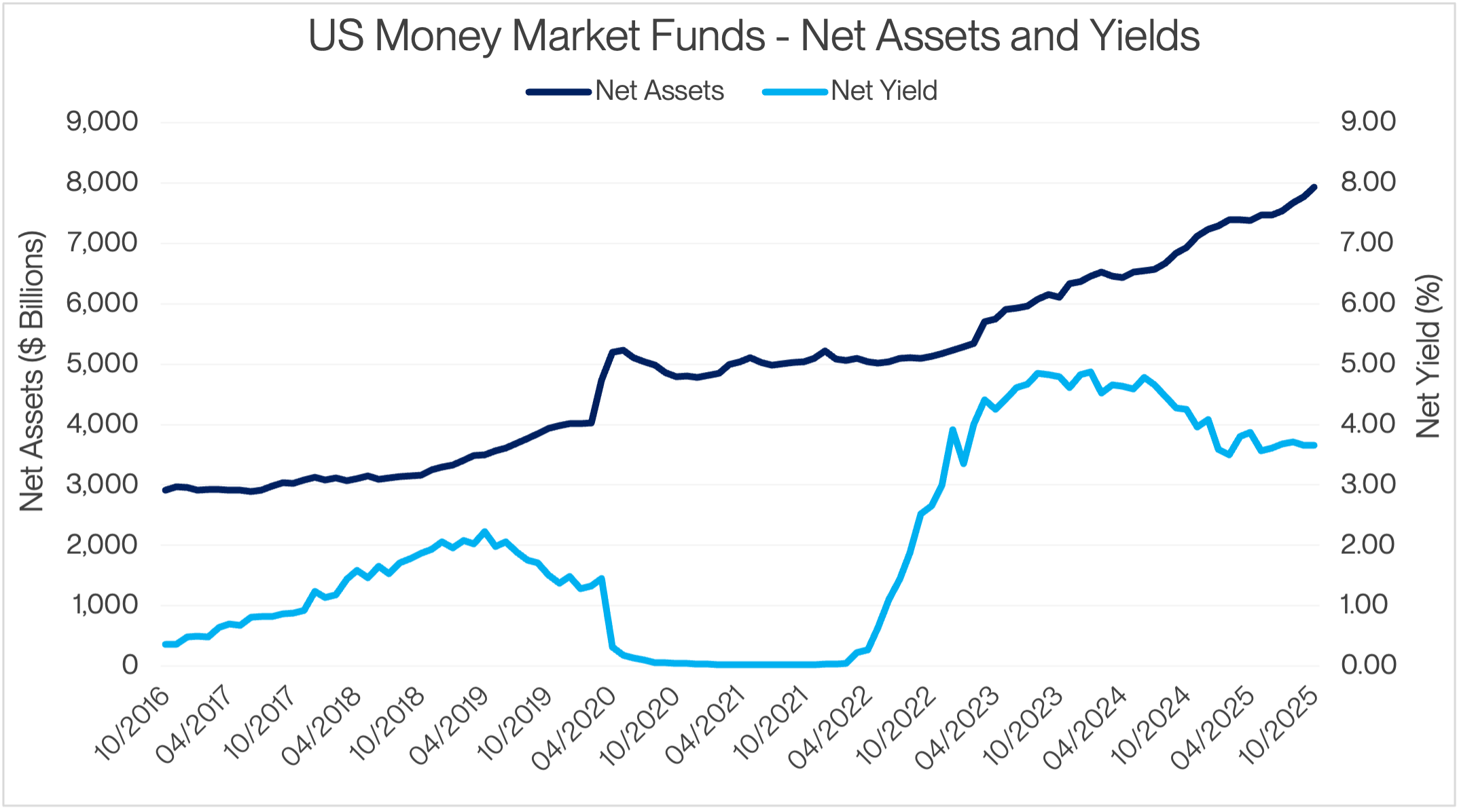
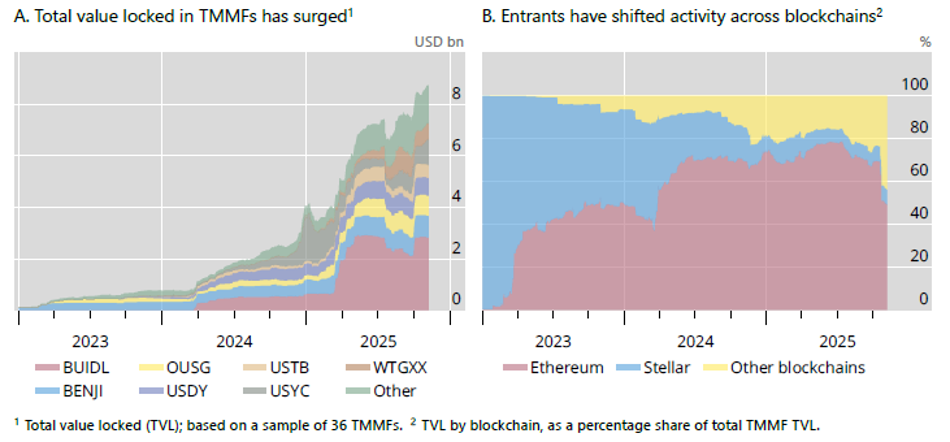
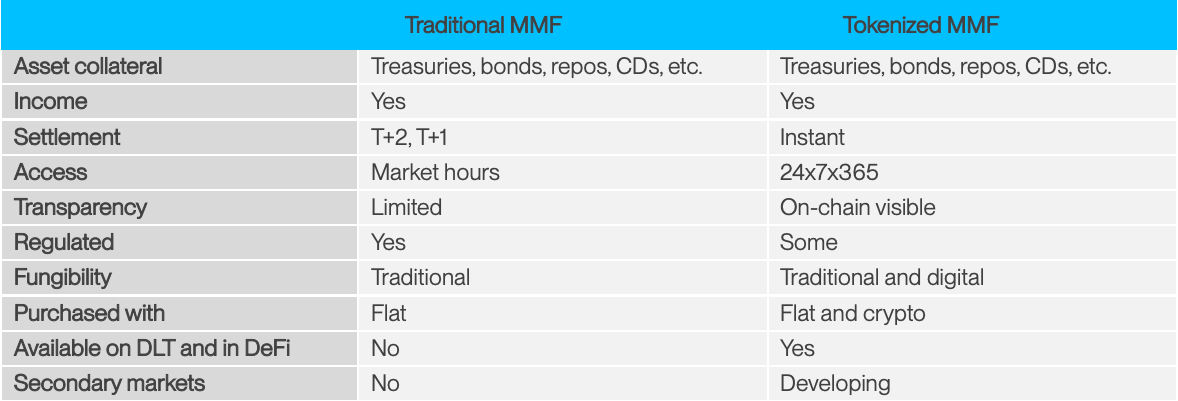
A new Federal Reserve easing cycle has begun, but there has been no easing of demand for money market funds (MMFs). MMFs continue to see robust inflows and record high balances, even though yields have been declining with the recent Fed rate cuts. What's behind this dynamic, and will the emergence of new "tokenized" money market funds alter the landscape?
According to the United States Securities and Exchange Commission (SEC), total money fund assets rose by $153.2 billion in October 2025 to a record high of $7.93 trillion. Crane Data, a provider of money market analysis and information, recently reported money fund assets broke the $8.0 trillion barrier for the first time ever on December 1, 2025. This seems counterintuitive given the shifting monetary policy backdrop. What gives?
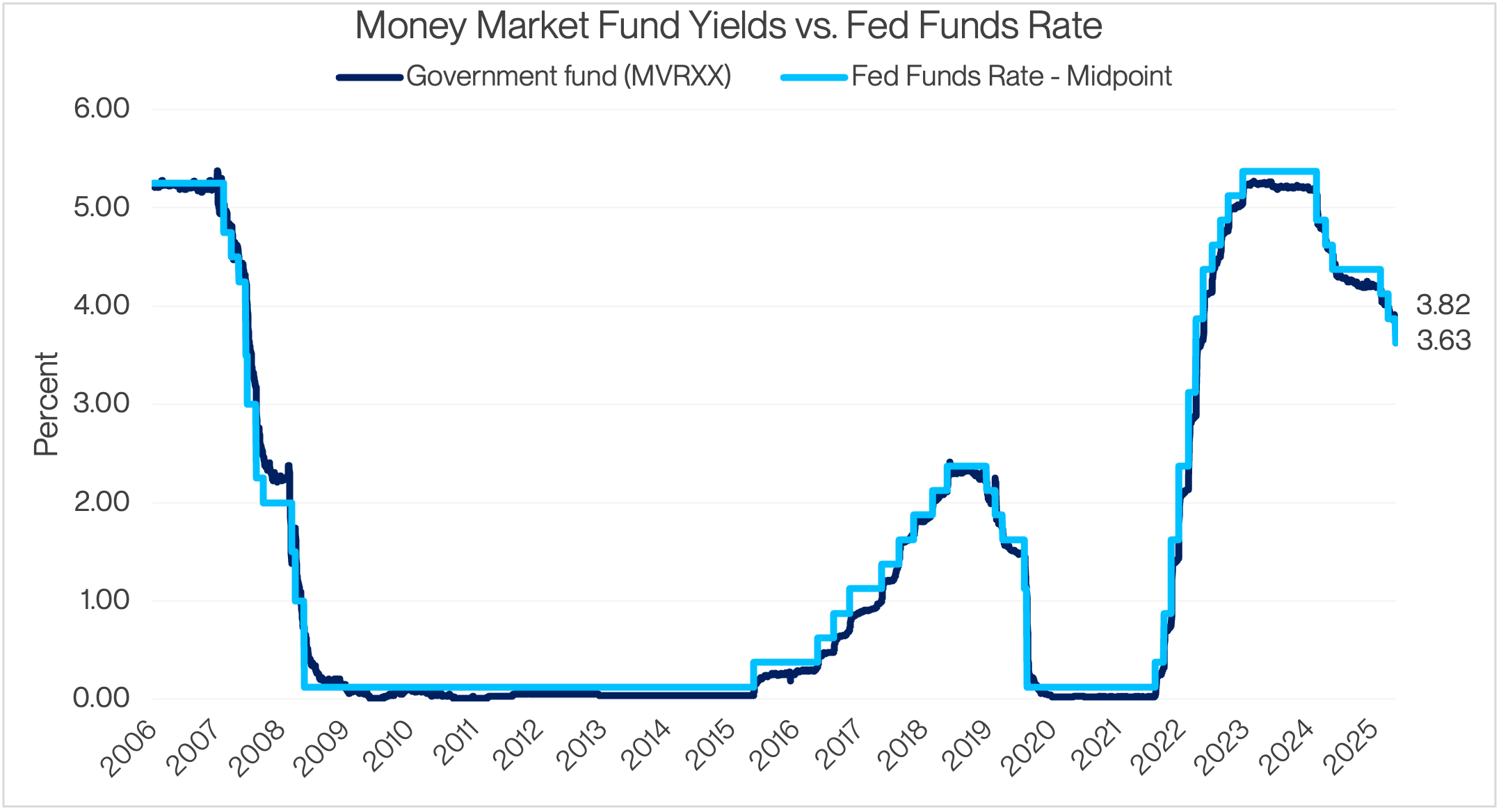
The US money market fund industry has skyrocketed in popularity over recent years, in part due to relatively lofty yields despite their low risk profile. Money market funds have seen particularly attractive yields over the past three years, in some cases over 5.0%, as the Federal Reserve battled record-high inflation with a series of rapid rate hikes beginning in early 2022. However, as the Fed began lowering its benchmark rate in the second half of 2024, money market yields have fallen in tandem as they tend to track very closely with the federal funds rate. As such, most large money market funds are now yielding below 4.0%.

 Article