Small modular and microreactors
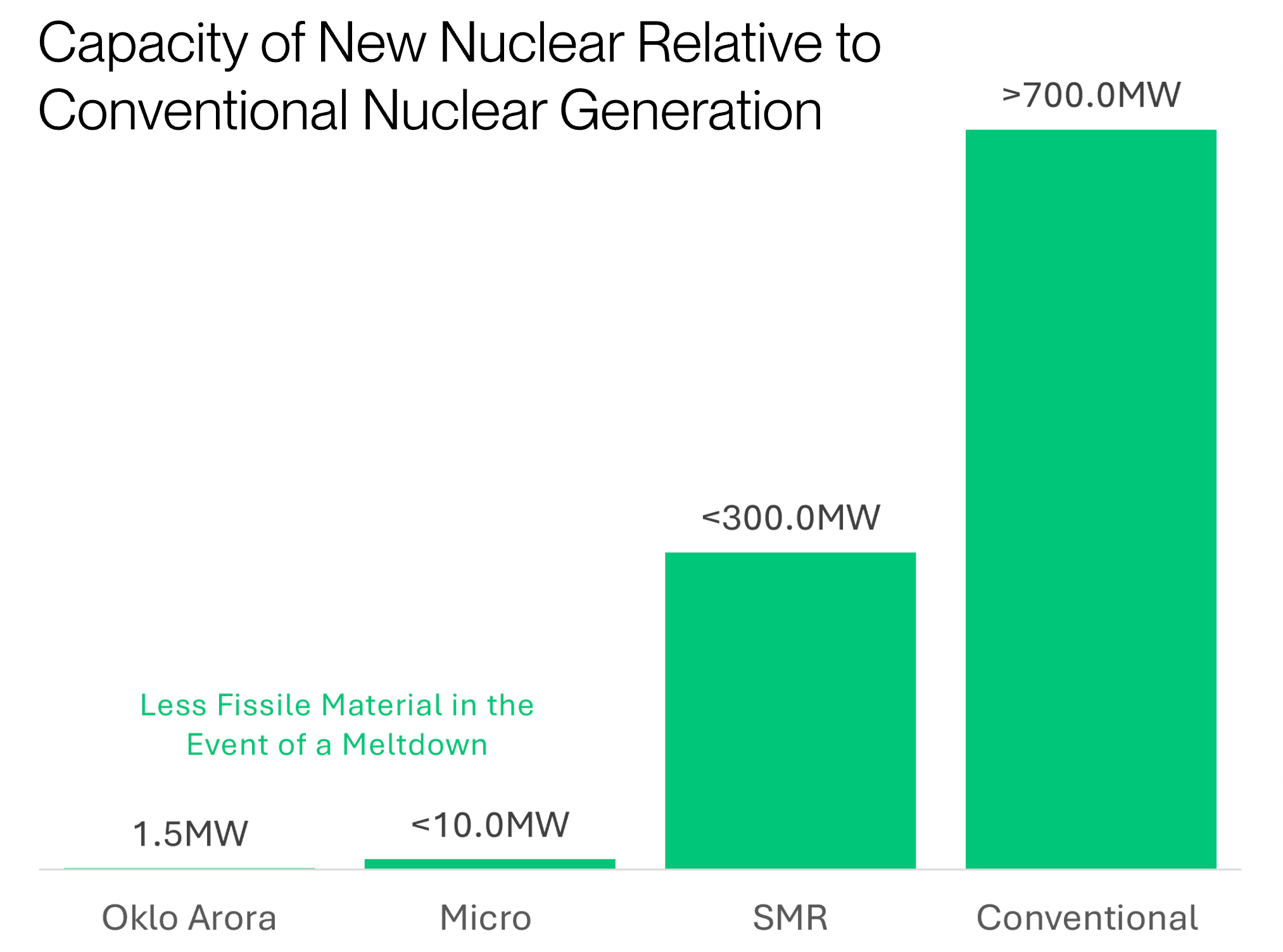
Light water reactors are the most common nuclear design in the United States, using water as a coolant for nuclear fuel rods. New designs include small modular reactors (SMRs) which are light water reactors 300MW or less in size and micro-reactors which are 50MW or less. While many light water SMRs are under development, only one design by Seattle-based Nuscale Power has been approved to date by the US Nuclear Regulatory Committee. Currently, no microreactor has been approved, yet companies like Oklo are developing reactors as small as 1.5MW.
Molten salt reactors
Molten salt reactors (MSRs) use molten fluoride salts as the primary coolant. They do not produce dangerous and radioactive fission gases that are under pressure, as the gases naturally absorb into the molten salt. Thus, MSRs will likely reduce the risks of radiation leaks making them safer. Molten salts play a key role in the reactor core acting as a coolant instead of using water. Terrapower, Moltex and Terrestrial Power are among the companies currently working on MSRs.
High-temperature gas-cooled reactors
High-temperature gas-cooled reactors (HTGRs) use helium as a coolant. Such reactors can achieve very high fuel utilization rates and operate at high temperatures. This reduces the amount of spent fuel and increases efficiency, thus mitigating some of the environmental and political challenges associated with storing spent fuel. HTGRs also create process heat with myriad applications from hydrogen to chemicals, paper, and food and beverage production. Companies in this space include USNC and XEnergy.
Ultimately, advanced nuclear technologies have the potential to improve safety and reduce costs. SMRs and microreactors can be deployed faster and at a lower cost due to their smaller modular designs that are easier to build and likely easier to permit.
Fusion
Nuclear fusion has fascinated nuclear physicists for decades but only recently (December 2022) did the Lawrence Livermore National Lab achieve net energy gain for a fusion reaction. Fusion is perhaps the technology closest from commercial scale we've discussed, but the potential for limitless clean energy is nonetheless captivating. Investors such as Breakthrough Energy Ventures with long time horizons and large sums of capital see the promise in the space, placing large bets on several, well-capitalized companies positioned to find a fusion solution. Notable companies include Helion, Zap Energy, TAE Technologies, Commonwealth Fusion Systems, Renaissance Fusion, Marvel Fusion and Avalanche – all of which have plans to complete demonstrations by 2027. However, timelines for pilots are much further out – 2030 and beyond.
Thus, while the technology holds significant promise, we won't experience a clean energy panacea overnight. In the meantime, we look forward to seeing the advances in fusion and working with the companies and founders on the bleeding edge of energy innovation.
Marine
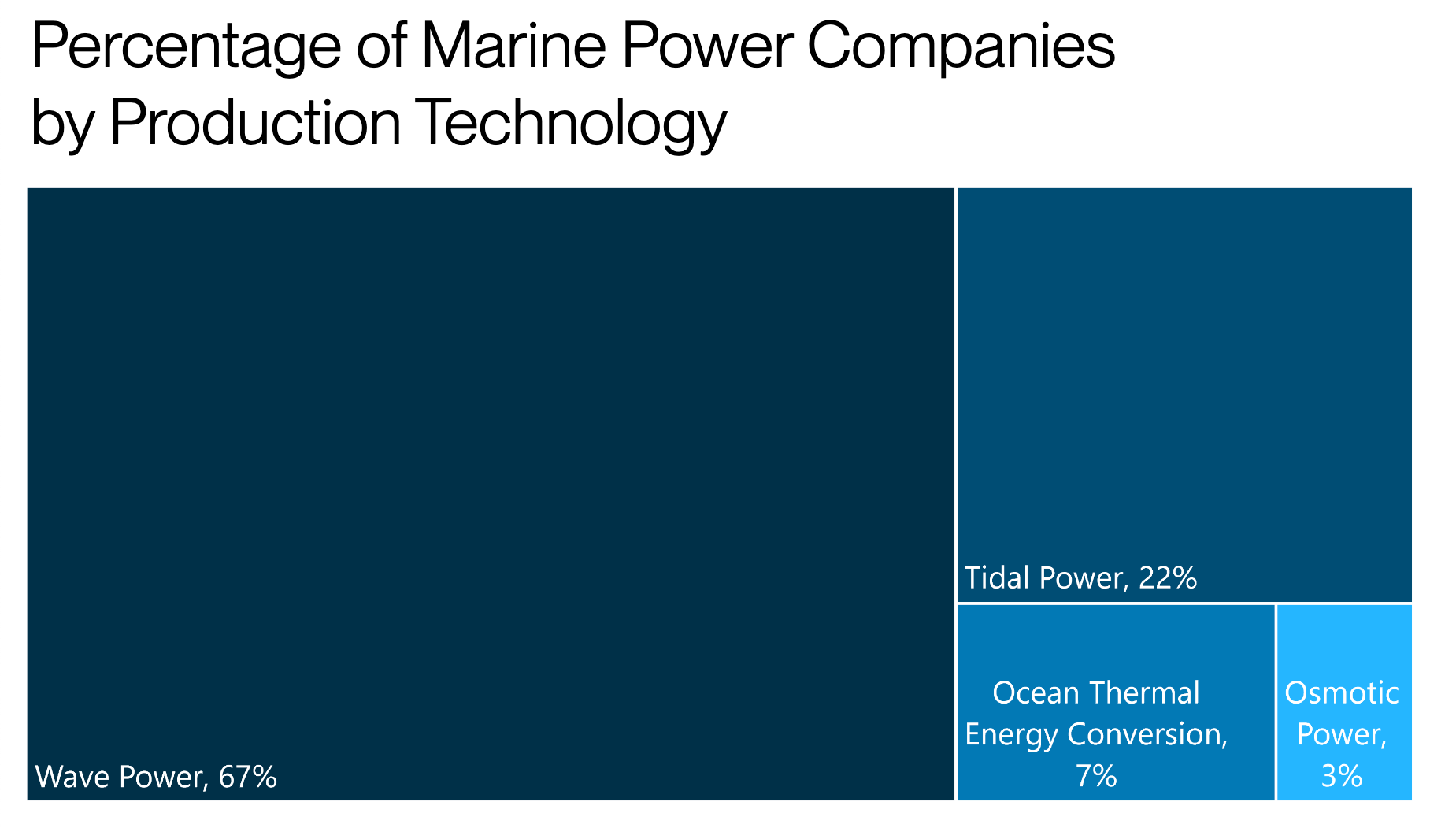
While the current generation from marine power is small, only about 500MW globally, the potential is huge – nearly double the current global electricity demand according to the International Renewable Energy Agency (IRENA). Ocean thermal energy conversion (OTEC) and wave power account for 96% of total potential production, but less than 1% of current deployed capacity, which is tidal power. However, VC-backed companies are recognizing the potential in wave power with 67% of marine power companies developing wave power solutions. Yet many of the top-funded private companies are not based in the US, such as Orbital Marine Power (UK, Tidal power), CorePower Ocean (Sweden, wave power) and Sweetch Energy (France, osmotic power).




 Article