Read more about our corporate brand here.

Search
Search
FX Risk Advisory for Corporates

The 50% FX hedge ratio: A practical starting point

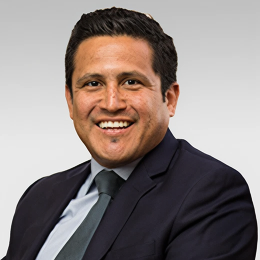
Ivan Asensio, Ph.D.
March 30, 2026

Key takeaways

  • FX risk is typically inherited by institutions, a byproduct of doing business internationally.
  • Inaction on FX risk management implies accepting an FX position. Absent of a well-defined FX view, inaction means taking on financial risk you do not expect to be compensated for.
  • A 50% hedge ratio can serve as a practical baseline, although it's not a rigid rule.

Currency-agnostic is not the same as currency-neutral.

When going global, companies and investment funds seldom develop a view on currencies as a requisite for cross-border expansion. In other words, a US manufacturer that decides to commercialize in Europe will do so regardless of the prospects for the euro. Similarly, a USD fund that targets Germany for future capital allocation will do so for its deep tech venture opportunities, the valuation of the euro may not factor into the decision.

This agnostic stance on foreign exchange (FX) typically results in inaction on FX risk management. Currencies are bought or sold only as triggered by operational needs such as having to make foreign payroll, recognizing revenues, or converting called USD capital to close a transaction. Unexplained performance from FX volatility is accepted without awareness or visibility.

We recommend a different baseline, as being currency-agnostic is not the same as being currency-neutral, or even currency-hedged. The former implies not having a view or feeling, but this is not the same as being insulated.

An agnostic stance on foreign exchange (FX) typically results in inaction on FX risk management.

Unhedged FX risk is misaligned with core finance principles of risk versus reward.

Every business takes risks. Key decisions about the product suite offered, how data will be monetized or what markets to compete in will ultimately determine success or failure. A company takes these risks but expects to be compensated for them. FX risk is different.

FX rate changes are not within the span of anyone's control. Nor are they predictable with respect to any other factor, as they may move independently of any other value stream. Theoretical constructs for FX determination give way to exogenous shocks such as pandemic outbreaks, geopolitics or abrupt trade policy changes, making FX very hard to predict. Thus, absent of a well-defined FX view, taking on FX risk means taking on risk you do not expect to be compensated for.

Absent of a well-defined FX view, taking on FX risk means taking on risk you do not expect to be compensated for.

A more appropriate launch-off point is the 50% forward hedge.

If being fully unhedged is undesirable as it exposes risk without expected reward, then is being fully hedged, a currency-neutral position, the answer? Sometimes it is, but not always.

One of the leading reasons why global institutions don't hedge is anxiety about the opportunity cost. Fully hedging an incoming cash flow in Australian dollars (AUD) with a forward contract delivers certainty and peace of mind but forfeits FX gains should the AUD subsequently strengthen between the time the contract is signed until the cash is received. By construction, forwards oblige execution at the ex-ante agreed-upon rate, regardless of whether it's more or less advantageous at contract expiry.

We believe a 50% forward hedge is a more appropriate launch-off point, versus an unhedged position, as it strikes an attractive balance between certainty and flexibility for potential upside. Also, a 50% hedge ratio aligns with the expected probability distribution for FX moves. Following 50 plus years of observing currencies, since the collapse of Bretton Woods shifted FX toward a floating system, we have learned that currency movements resemble a random walk. In other words, the best predictor of tomorrow's FX rate is today's FX rate. This concept was notably synthesized by the findings of Richard Meese and Kenneth RogoffD and still holds for most major currencies in highly liquid markets. Practically speaking, this means a currency is about as likely to strengthen as weaken, or a 50-50 proposition. This is considered a stylistic fact that's supported by empirical evidence. Dating back to 1976, the DXY Index has gone up 49.84% of days and gone down 50.16% of days.D

A 50% hedge ratio can serve as a practical baseline, although it's not a rigid rule.

The 50% forward hedge ratio represents a neutral starting point, from which companies and funds may adjust based on a few factors including forecast visibility, risk tolerance, currency view or business need. For example:

  • If the probability that the cash flow will materialize is low or uncertain, reduce forward hedge ratio to less than 50%, or add purchased options to the mix. This is common, for example, in bid-to-award situations where the exposure is contingent on winning a competitive bidding process or attaining regulatory approval.
  • For USD cost averaging, start with a forward hedge ratio of less than 50% and layer in as cash flow maturity nears. Corporate cash flow hedge programs are typically structured this way to minimize variability in budget rates one year to the next.
  • If opportunity cost isn't a concern and certainty is valued above all things, then upsize forward hedge ratio to 100%. Operational cash flows are approached this way. For instance, when a venture fund signs a purchase contract for an overseas asset, the fund must call a specific amount of USD capital to close the transaction and will fully hedge the exposure with a forward contract to cover the sign-to-close period.
  • If rate flexibility is valued, then institutions will add purchased options, collars, and/or participating forwards to their FX hedge product suite.

Concluding comments

Decision-makers tend to be agnostic on currencies.

However, as currency direction is fundamentally uncertain, a 50% hedge ratio represents a disciplined middle ground and more appropriate starting point. It reduces FX risk, while avoiding the implicit speculation embedded in remaining fully unhedged. The 50% baseline creates a transparent rule that is intuitive and easy to grasp by internal stakeholders, the Board of Directors and external investors.

If you'd like to review your FX risk profile and talk through possible solutions, please reach out to your FX contact, or FXRiskAdvisory@firstcitizens.com.

Read next

Explore these related articles to help you stay on top of the latest data, insights and developments in FX exchange advisory and FX risk advisory for corporates.

Capitalize on low option costs for FX hedging FX Risk Advisory for Corporates
Read Article Article

Capitalize on low option costs for FX hedging

Sep 16, 2026

Irwin Bautista, Grayson Prickett

Foreign Exchange budget rates: A key milestone in treasury and FP&A maturity FX Risk Advisory for Corporates
Read Article Article

Foreign Exchange budget rates: A key milestone in treasury and FP&A maturity

Jun 23, 2026

Ivan Asensio, Andrew Rossillon

The 50% FX hedge ratio: A practical starting point FX Risk Advisory for Corporates
Read Article Article

The 50% FX hedge ratio: A practical starting point

Mar 30, 2026

Ivan Asensio

More about the authors

Ivan Asensio, Ph.D.

Ivan Asensio, Ph.D.

Managing Director, Head of FX Risk Advisory


Source: Meese, R. A., & Rogoff, K. (1983). Empirical exchange rate models of the seventies: Do they fit out of sample? Journal of International Economics, 14(1-2), 3–24. https://doi.org/10.1016/0022-1996(83)90017-X

Analysis uses data from Bloomberg and analyzes 12,888 days between 1/2/1976 and 3/17/2026.

Foreign exchange transactions can be highly risky, and losses may occur in short periods of time if there is an adverse movement of exchange rates. Exchange rates can be highly volatile and are impacted by numerous economic, political and social factors as well as supply and demand and governmental intervention, control and adjustments. Investments in financial instruments carry significant risk, including the possible loss of the principal amount invested. Before entering any foreign exchange transaction, you should obtain advice from your own tax, financial, legal, accounting, and other advisors and only make investment decisions on the basis of your own objectives, experience and resources. Opinions expressed are our opinions as of the date of this content only. The material is based upon information which we consider reliable, but we do not represent that it is accurate or complete, and it should not be relied upon as such.

This material, including without limitation to the statistical information herein, is provided for informational purposes only. The material is based in part on information from third-party sources that we believe to be reliable but which has not been independently verified by us, and, as such, we do not represent the information is accurate or complete. The information should not be viewed as tax, accounting, investment, legal or other advice, nor is it to be relied on in making an investment or other decision. You should obtain relevant and specific professional advice before making any investment decision. Nothing relating to the material should be construed as a solicitation, offer or recommendation to acquire or dispose of any investment, or to engage in any other transaction.

Banking and lending products or services are offered by First Citizens Bank. Accounts are subject to credit approval. Restrictions and limitations may apply.

Back to top
You are now leaving First Citizens Innovation Banking

You will be directed to a different website or mobile app that has its own terms of use, visitor agreement, security and privacy policies. First Citizens Innovation Banking is not responsible for (and does not provide) any products, services or content at the third party site or app, except for the products and services that carry the First Citizens Innovation Banking name.